Free Rodent Inspection in Fort Worth, TX
A rodent inspection in Fort Worth works the roofline from a ladder, reads the attic, checks the crawl space or slab edge, the garage and the trees, then names the animal and lists every opening in a written report. The visit costs nothing.
- No fee for the inspection
- Written findings, itemized quote
- Answered 24 hours a day
What a Fort Worth rodent inspection checks
A Fort Worth rodent inspection checks five zones in one visit: the roofline from a ladder, the attic from inside, the crawl space or the slab edge, the garage, and the trees and fence lines that reach the roof. Every opening is measured against a quarter inch, the rat-proofing standard published by UF/IFAS, and every zone is recorded in the written findings.
The roofline
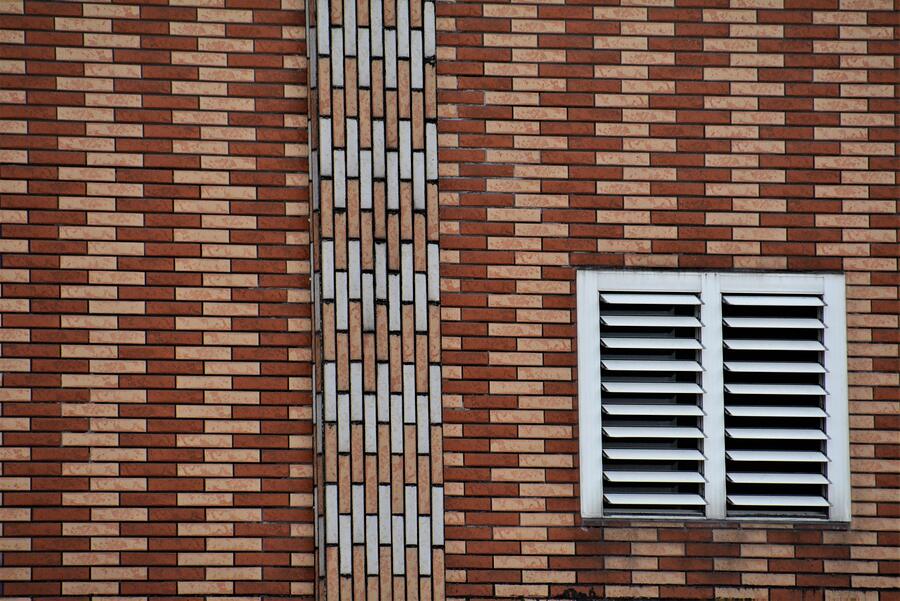
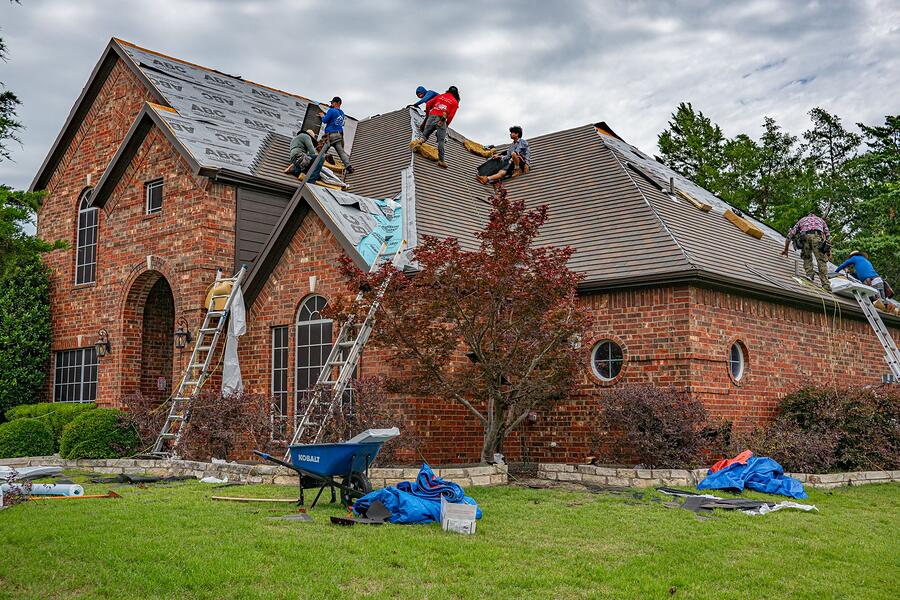
The roofline gets the most time because it is where a Fort Worth attic is entered. Whoever attends checks the soffit-fascia joint, gable vents and their screens, ridge vents, plumbing stack boots, roof returns, the chimney and the electrical mast, looking for rub marks, chewed edges and droppings on the drip edge that show which openings are in use. On a pre-1949 house with several shingle layers and aged decking, the old plumbing penetrations are checked one by one.
The attic
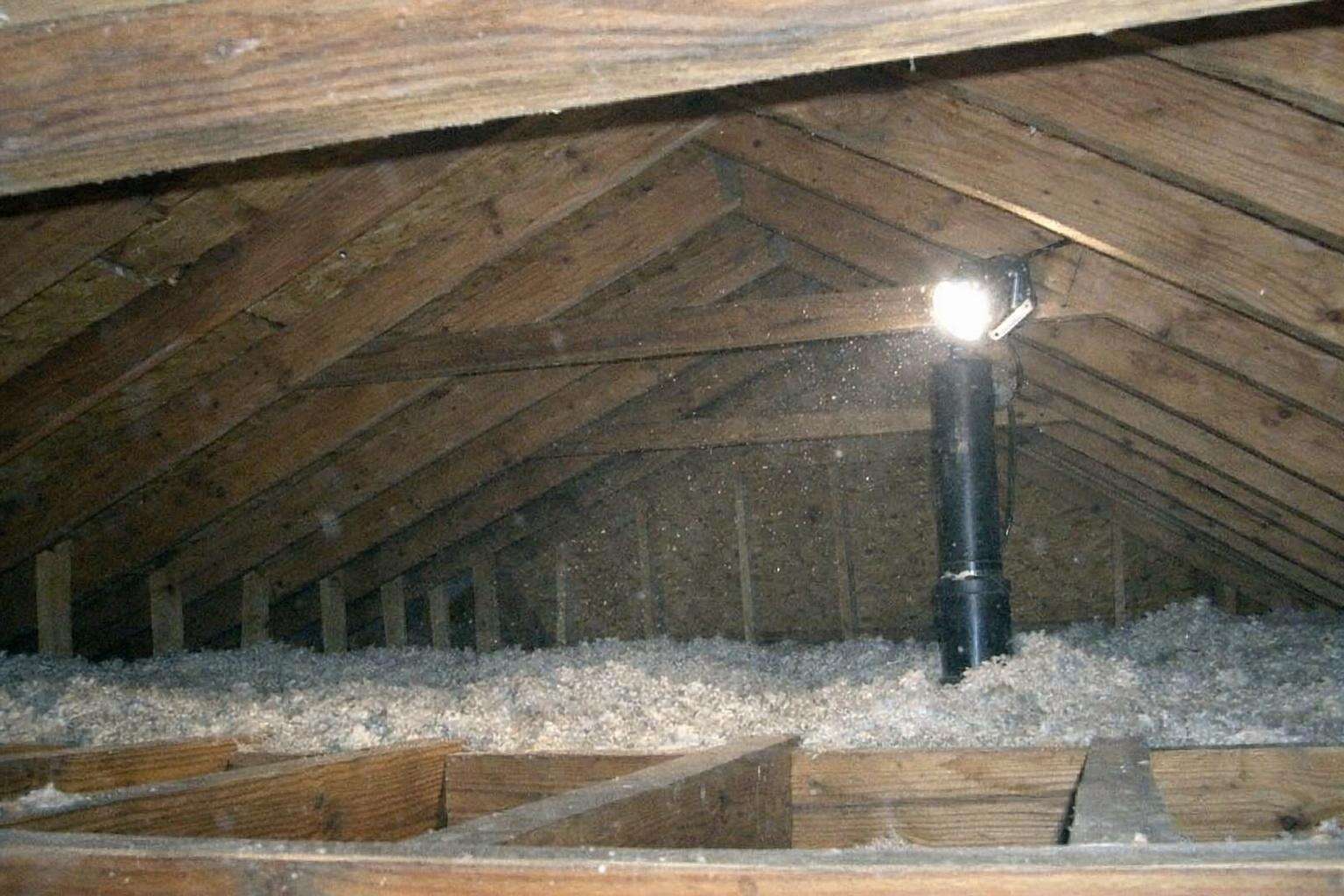
Inside, the inspection reads the blown insulation for runs, hollows and nests, checks the top plates, ductwork and the air handler platform for droppings, and looks at wiring and duct wrap for gnawing. The Department of Energy notes that compressed insulation does not deliver its rated R-value and wet insulation performs poorly, so the condition of the insulation is noted for the report even when cleanup is declined.
Crawl space or slab edge
Under a pier-and-beam house the skirting, foundation vents and the gaps where plumbing rises through the floor are checked; on a slab house the weep holes in the brick veneer and the joint where the slab meets the wall are checked instead. A burrow at either one points to a Norway rat and moves the plan to ground level.
The garage
The garage door seal, the bottom corners of the door track, the door into the house, the water heater closet and any pet food or birdseed stored on the floor are checked for droppings and gnawed packaging.
Trees and fence lines
Outside, the inspection notes every live oak or pecan limb touching the roof, the fence tops and utility lines that land at the eave, woodpiles and dense shrubs against the walls, and fruit or nuts on the ground. UF/IFAS describes the roof rat as arboreal, traveling along branches, wires and fence lines, so the tree that touches the roof is treated as part of the entry.
How droppings and other signs are read
Droppings identify the animal before a trap is ever set: a roof rat leaves droppings a quarter to half an inch long, shaped like a small banana with pointed ends, according to UF/IFAS. Recent droppings are dark and pliable, while old ones have gone gray and break apart. Where they collect tells the inspector where the animals travel.
- Droppings along a top plate or on top of ductwork mark a run, and a run is where the traps go.
- A dark, greasy smear along a fascia board, a fence top or a downspout is a rub mark left by a coat that has passed many times.
- Gnaw marks on a vent screen, a soffit edge or wiring insulation show an opening being worked or already open. UF/IFAS notes that rats chew wires and can potentially start fires.
- A hollow in the blown insulation lined with shredded material is a nest, and a nest near the chimney or the air handler is usual in a Fort Worth attic.
- A musky odor at the hatch, stronger in summer when attic heat pushes the animals down into wall voids and the garage.
Timing matters too. Scratching or a scamper after dark points to a rat; daytime noise usually points to a squirrel and a different job. A homeowner who has been told the noise is the house settling or a tree on the roof deserves an answer, and the droppings give one in a single visit.
Do I have rats or mice?
In a Fort Worth attic the answer is almost always a roof rat, and the inspection settles it by dropping size and by where the evidence sits. Rats leave the quarter-to-half-inch pointed droppings described above; mouse droppings are far smaller. Roof rats live at the roofline; house mice show up in kitchens, garages and wall voids and are a distant third in this market.
| What the inspection finds | Points to | Where the work goes |
|---|---|---|
| Pointed droppings along attic top plates, rub marks at the soffit, a limb on the roof | Roof rat | Roofline sealing and attic trapping |
| Burrow at the slab edge or under the skirting, larger blunt droppings near the ground | Norway rat | Ground-level sealing at the foundation and garage |
| Very small droppings in cabinet corners, gnawed packaging in the pantry | House mouse | Quarter-inch sealing at doors, weep holes and utility lines |
| Noise in daylight, chewed vent louvers, acorn shells | Squirrel | A wildlife job with different rules |
Species confusion is common enough that homeowners on forums describe two companies disagreeing over the same droppings. The report names the animal and the evidence, so a second opinion can argue with the evidence instead of the conclusion. The roof rat removal page covers the usual answer, and the mouse removal page covers the less common one.
What the written findings contain
The written findings from a routed inspection contain the species and its evidence, every opening with its location and size, the condition of the attic and crawl space, the recommended sequence, and a quote with trapping, sealing and cleanup each on a separate line. A single total on a business card is a sales visit with a different name.
- The animal named, with the dropping size and shape, the noise pattern and the rub or gnaw marks that support it
- Each opening at the roofline, the foundation and the garage, with where it is, how large it is and whether it shows use
- Attic condition: dropping density, nest sites, insulation runs, gnawed wiring or ducts, odor, and any carcass
- Crawl space or slab-edge condition, including skirting gaps and foundation vent screens
- Trees, fence lines and utility lines that reach the roof, and any harborage against the walls
- The sequence recommended: sealing first, trapping alongside, a verification visit, then cleanup only if wanted
- The quote in lines: inspection at zero, sealing, trapping, follow-up visits, cleanup, insulation, and any ongoing plan priced so it can be refused
An itemized report is the document homeowner forums tell each other to insist on, because two itemized reports for the same house can be compared opening by opening. The report also becomes the first half of a rodent clearance letter when a sale, lease or board needs one. The about page lists what the routed contractors are expected to hand over.
How do I know if the rats are gone?
The rats are gone when a return inspection, booked at least a week after the traps go down, finds no fresh droppings, no new gnawing, silent traps and a quiet ceiling. The first inspection sets that baseline; the verification visit compares against it.
Timing comes from published figures. HomeGuide puts trapping a small number of animals at two to three days and a severe infestation at one to two months, and UF/IFAS advises leaving traps in place a week or more because roof rats are wary of new objects. A homeowner who hears nothing for three nights after the sealing has a good sign; a homeowner who hears nothing for three weeks and passes the return visit has a finished job.
The sequence is what makes verification meaningful. Where the roofline has been closed to a quarter inch and the traps have gone quiet, silence means the house is empty. Where nothing was sealed, silence may only mean the animals are outside for the night, and the noise returns with the first cold front. The rodent exclusion page describes the sealing that makes the return visit conclusive.
When to book a rodent inspection in Fort Worth
Book the inspection on the first night of noise, and where there has been no noise, book it before October, because Fort Worth calls ramp in the fall and peak in January and February as the animals move into attics for warmth. An inspection in September finds the open soffit while it is still empty.
The first sound
A scratch over the bedroom ceiling after dark is the earliest sign and the cheapest one to act on. UF/IFAS gives the roof rat a gestation of 21 to 23 days and litters of five to eight, with four or five litters a year, and Fort Worth's mild winters barely pause the cycle. Waiting a month to see whether the noise stops is a decision to house a litter.
Before October
Sealing done before the first cold snap keeps the winter migration out. The inspection is the list of what to seal, so an early-fall visit gives the contractor time to close the roofline before the January peak.
Summer calls
A ventilated attic under a composition-shingle roof reaches 130 degrees and more in a Fort Worth summer, and rats move down into wall voids and the garage to escape it. A July call about scratching inside a wall is inspected the same way, with the attic visit scheduled for early morning.
Before a sale or a lease
A seller in the option period or a landlord with a move-in date books the inspection first, because any sealing, trapping and verification has to fit before the closing or the move.
What a rodent inspection costs in Fort Worth
The rodent inspection routed here is free, and the quote it produces prices the work that follows in separate lines confirmed before anything starts. Nationally a standalone rodent inspection is billed at up to $175 in HomeGuide's 2026 figures, and homeowners on forums describe paying around $75 just to receive a bid.
| Line item | Here | National band (HomeGuide 2026) |
|---|---|---|
| Standalone rodent inspection | Free | $0 to $175 |
| Full-home exclusion | Quoted from the findings | $500 to $2,500 |
| Trapping and removal | Quoted from the findings | $250 to $1,200 |
| Attic cleanup and decontamination | Quoted separately | $600 to $2,500, severe cases to $4,000 |
| Attic insulation removal and replacement | Quoted separately | $2.50 to $5.50 per square foot |
No Fort Worth-specific cost survey exists, so the bands are national and describe typical jobs. What moves a quote inside them is the number of openings found, whether the house has a crawl space and skirting to screen, whether it is two stories, how long the animals have been inside, and whether the homeowner wants the attic cleaned. A free inspection makes it practical to collect two or three itemized reports and compare them.
What a Fort Worth inspection finds house by house
The findings on a Fort Worth inspection follow the age of the house: a pre-1949 pier-and-beam home under live oaks in Fairmount, Ryan Place, Crestwood, Arlington Heights or the Cultural District produces a roofline list, and a post-1990 slab tract home in Alliance or along the Chisholm Trail corridor produces a vent-and-garage list. There are no basements in either, so the attic is the shelter in both.
The historic districts
Under the oak canopy the inspection starts at the limb on the roof and follows it to the eave. Aged decking, multiple shingle layers and plumbing stacks with decades-old boots are the usual openings, and the crawl space skirting and foundation vents get their own pass. The Arlington Heights and Crestwood pages describe what those streets tend to show.
The slab subdivisions
In the far north ZIP codes and the southwest, the inspection spends its time at ridge vents, roof-to-wall gaps at builder-grade soffits, the garage door seal and the weep holes in brick veneer. On the pasture edge the report also notes displacement pressure from land being cleared next door.
Who inspects
Rat and mouse work in Texas falls under the Pest Control category of the Structural Pest Control Act, which requires a business license from the Texas Department of Agriculture's Structural Pest Control Service and a certified applicator. Every contractor we route holds a TDA structural pest control business license, and the TDA's own homeowner guide, Use a Licensed Applicator to Control Rodents in Your Home, says the same thing to Texas homeowners directly. Texas Parks and Wildlife has no role unless the same attic holds a raccoon, opossum or skunk.
What to check about whoever inspects
Four things tell you whether an inspection was worth the hour: a ladder at the eave, time in the attic, a written report in separate lines, and a TDA license number given on request. An inspector who quotes from the driveway has looked at nothing a rat uses.
- Confirm the business through the TDA Structural Pest Control Service current-license lookup before the visit, and ask which certified applicator is attending.
- Watch where the time goes. The roofline from a ladder and the attic from inside are the two zones that decide a Fort Worth job.
- Ask for the findings in writing with every opening listed and the quote split into sealing, trapping, follow-ups, cleanup and any ongoing plan.
- Ask what warranty the contractor offers on sealing, how long it runs and whether it renews, and get the terms in writing before comparing bids.
- Ask how many return visits are included and what happens if the noise comes back after the last one.
The contact page books the visit, and the line is answered whatever time you call.
Services that usually go with this one
A Fort Worth job tends to run as a sequence, and these pages describe the steps on either side of this one.
- Rodent Exclusion: Soffit returns, gable and ridge vents, plumbing stacks, weep holes and skirting closed in steel mesh and sheet metal.
- Roof Rat Removal: Snap trapping on the attic runs, timed with sealing, for the rat that climbs the oaks and the cable drops.
- Rodent Clearance Letters: A written inspection report for a closing, a lease, an HOA dispute or an insurance claim.
The about page explains how the parts fit together, and the phone is answered at any hour.
Finding the entry points
Where the openings usually turn out to be.
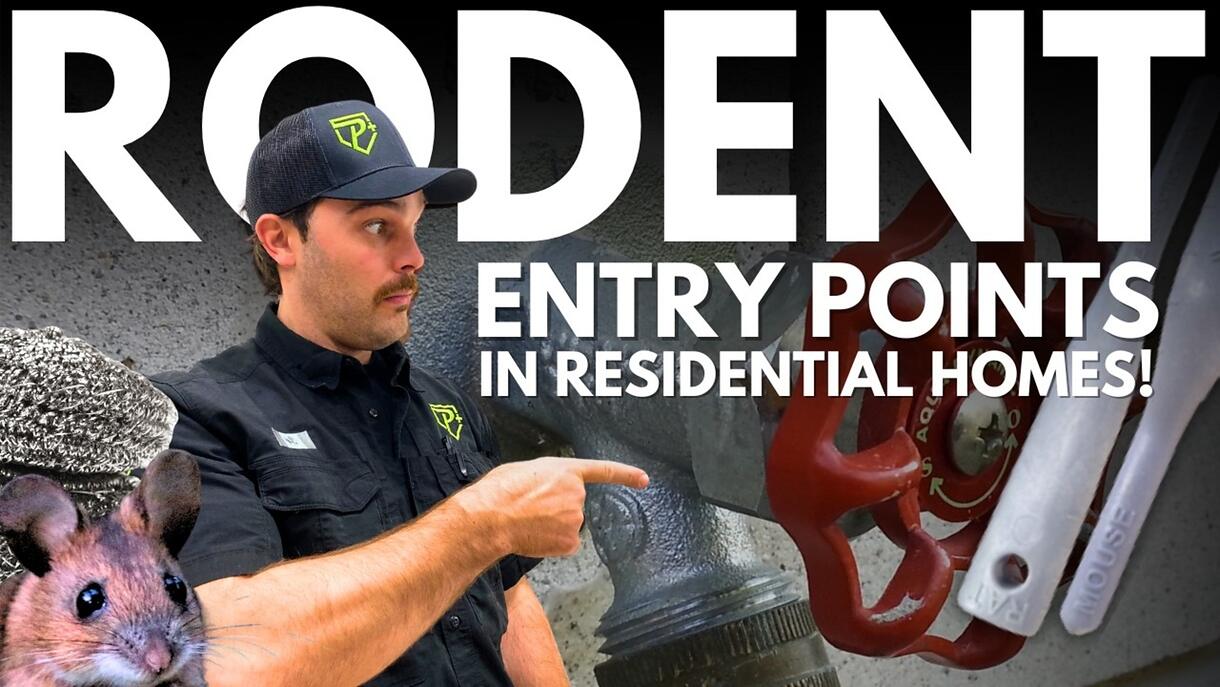
Video: How to find rodent entry points and seal them, from Pest Protection Plus.
How the free inspection runs
The inspection is the first step of an exclusion-first job, and the sealing, trapping and verification that follow are built on what it records.
-
Book the visit
Call or send the form with what was heard, where and when. Someone answers 24 hours a day and the inspection costs nothing.
-
Roofline, attic, foundation, garage, trees
Whoever attends works the eave from a ladder, reads the attic, checks the crawl space or slab edge and the garage, and walks the yard for limbs and fence lines that land on the roof.
-
Name the animal and list the openings
Droppings, rub marks and gnawing identify the species, and every opening over a quarter inch is recorded with its location.
-
Write the findings and the quote
The report goes to the homeowner with sealing first in the sequence, trapping alongside, and cleanup priced on its own line so it can be declined.
-
Seal, trap, verify
If the homeowner goes ahead, the contractor closes the openings in metal, sets traps on the runs, and returns to confirm the house is quiet.
Ready to start? Call (817) 710-2756 or Book a Free Inspection.
Why Fort Worth homeowners start with this inspection
An inspection earns its place by what it produces afterward, so these are the three things it puts in your hands.
The report tells you how long the job will take
A written inspection puts a timeline next to the quote. HomeGuide's national figures give two to three days of trapping for a small number of animals and one to two months for a severe infestation, and the dropping density and nest count in the attic say which of those a house is facing. Homeowner forums are full of people two and four months into a job nobody explained, and a report that states the expected length up front is the answer to that.
HomeGuide 2026: trapping takes 2 to 3 days for a few animals, 1 to 2 months when severe
Booked early, before the litter arrives
A free inspection removes the reason people wait. UF/IFAS gives the roof rat a gestation of 21 to 23 days and litters of five to eight, four or five times a year, and Fort Worth's mild winters keep that cycle running. The first night of noise is the cheapest moment to inspect, and an inspection in September, before the January peak, finds the open soffit while nothing is living behind it.
UF/IFAS: roof rat gestation 21 to 23 days, litters of 5 to 8
The inspector the state tells you to hire
The Texas Department of Agriculture publishes a homeowner guide titled Use a Licensed Applicator to Control Rodents in Your Home, and every contractor we route holds the TDA structural pest control business license that guide describes. The license number can be confirmed through the TDA current-license lookup before the visit, and the same licensed contractor who writes the findings is the one accountable for them.
TDA homeowner guide: Use a Licensed Applicator to Control Rodents in Your Home
What Reddit Says About Rodent Inspections in Fort Worth
Homeowners on r/pestcontrol, r/HomeImprovement and r/homeowners treat the inspection as the moment the whole job is decided, and their first advice is to get more than one. They describe inspection fees of around $75 just to receive a bid as a real barrier to that, and a free inspection changes the arithmetic. They also want the report in writing and itemized, with trapping, sealing and cleanup as separate programs, because a bundled total cannot be compared with anything.
The warnings are about inspections that were no inspection at all. A quote produced from the driveway with nobody on a ladder or in the attic. A plan that starts and ends with bait stations and never mentions the roofline. A quote with a monthly monitoring contract folded into the removal price. Two companies looking at the same droppings and naming two different animals, which one thread describes at length.
The questions they tell each other to bring to the visit: what exactly is included and what is a separate line, whether the sealing is warrantied and whether the warranty renews, whether cleanup is part of the job or extra, how many follow-up visits are included, and what happens if the animals come back.
Under the practical advice runs the other theme: weeks of lost sleep over a sound nobody else in the house will admit to hearing, and the relief of a stranger with a flashlight saying the noise is real. Several threads read as a request for exactly that.
The contractors we route climb the ladder, read the attic, and put the findings in writing.
A typical inspection call from a Fort Worth homeowner
The situation: A woman living alone in a prairie-style house in Arlington Heights hears a run across the ceiling most nights around midnight and a scrape inside the bedroom wall before dawn. Relatives who have stayed over heard nothing and have told her, kindly and then less kindly, that she is imagining it. The house has its original wood soffits, a live oak over the back roof, and an attic she has never been in. She has stopped sleeping through the night.
What gets done: Whoever attends the free inspection starts at the oak limb and follows it to the eave, where the rear gable vent screen has been chewed open at one corner and the fascia below it is rubbed dark. On the roof, the rubber boot on a plumbing stack has split and pulled away from the pipe, leaving an opening well over a quarter inch. In the attic there are pointed droppings of the roof rat size along the top plate over the bedroom and a run through the blown insulation to a nest by the chimney. The crawl space skirting and foundation vents are intact. The written findings name a roof rat, list the two openings with photographs, and price sealing, trapping, two return visits and an optional insulation line separately.
How it turns out: The homeowner reads the report at the kitchen table with the photographs beside it and books the sealing for the following week. The relatives get a copy. The vent is screened in hardware cloth, the stack is collared in sheet metal, traps go on the marked run, and the verification visit two weeks later finds nothing fresh. She keeps the findings with the house papers.
Inspection questions from Fort Worth homeowners
These are the questions that come up when someone books a rodent inspection for the first time.
Call (817) 710-2756How long does a rodent inspection take?
A thorough rodent inspection on a Fort Worth house takes about an hour, longer on a two-story pier-and-beam home with a crawl space and a full oak canopy. Most of that time is spent on a ladder at the eave and inside the attic, because those are the two zones roof rats use. The garage, the foundation or slab edge and the trees take the rest. The written findings usually follow the same day, and the itemized quote comes with them.
Do I need to be home for the inspection?
Someone needs to be home to open the attic hatch, the garage and any room where noise has been heard, and it helps if that person can say where and when the sounds happen. The roofline and the yard can be inspected from outside, but the attic read is the part that names the animal and maps the runs, so it cannot be skipped. Plan on being available for about an hour and on walking through the findings with whoever attends before they leave.
Will the inspection tell me whether the noise is a rat or something else?
Yes, and that is the main thing it is for. Droppings of a quarter to half an inch with pointed ends mean a roof rat by the UF/IFAS description, much smaller droppings mean a mouse, a burrow at the foundation means a Norway rat, and noise in daylight with chewed louvers usually means a squirrel. The report states which one and gives the evidence, so a homeowner who has been told the sound is nothing has a licensed contractor's written finding to point to.
Should I get more than one inspection?
Getting two or three inspections is the advice homeowner forums give most often, and a free inspection makes it easy to follow. Ask each contractor for written findings with the openings listed and the quote in separate lines, then compare the lists opening by opening. A contractor who found a split stack boot that another missed has done the better inspection. A quote that is a single total cannot be compared with anything, and forums describe wildly different totals for work that sounded the same.
Is there any pressure to book the work after a free inspection?
The findings and the quote are handed over and the decision is the homeowner's, with each line priced so it can be taken or declined on its own. Sealing and trapping can be booked now and cleanup later, or the report can go to another contractor for a second bid. Someone answers the line 24 hours a day if there are questions after the visit, and the rodent exclusion page explains the sealing the report will recommend.