
About Rodent Removal Fort Worth
One number, answered at any hour, that puts a Fort Worth homeowner in front of a licensed rodent contractor with a free inspection and a written, itemized quote.
- Office on Main Street downtown
- Tarrant County and the towns around it
- A license you can look up
What the phone line is for
The number on every page reaches a dispatcher 24 hours a day, and the point of that call is to work out what has happened at the house and get the response moving. You describe what you hear, which room it is over, what time of night and for how long. That narrows the species before anyone drives out and decides whether the first visit is a routine roofline inspection or something that needs a sooner slot.
From there a licensed contractor covering your part of Tarrant County is booked for the free inspection. The inspection is the product: a walk of the roofline, the attic, the crawl space if the house has one, the garage, the interior signs and the yard, with every opening recorded, and a written quote with trapping, sealing and cleanup on separate lines.
The office is at 777 Main St, Suite 600, in downtown Fort Worth by Sundance Square. Written contact goes through the form on the contact page; no quote is ever produced from a form alone.
What to expect on the job
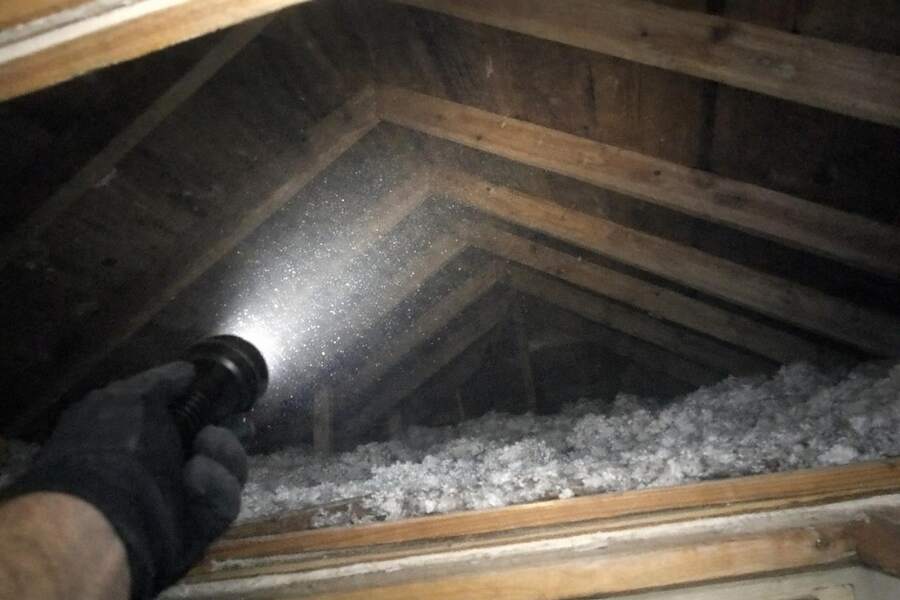
Expect a ladder at the eave before anyone goes into the attic, because on a Fort Worth house the way in is above head height. Soffit returns, gable and ridge vents, plumbing stacks, the chimney top and the joint where soffit meets brick are checked first, then the attic for droppings, rub marks and trails worn into the blown insulation. On a pier-and-beam house the crawl space gets the same attention from below: skirting, foundation vents and the gaps around plumbing chases.
Expect the sealing to be explained before it is sold. Galvanized hardware cloth at the quarter-inch standard, sheet metal, mortar at the brick and screened vents are what hold; a bead of expanding foam by itself is what a cheap quote usually means. Expect traps to stay down at least a week, because UF/IFAS notes roof rats are wary of new objects, and expect the last opening to be closed only once the activity stops.
Expect plain talk about time. HomeGuide reckons two to three days to trap a few animals and one to two months for a bad infestation, and the sealing is what gives that timeline an end.
The license to check before work starts
Rodent work in Texas is regulated by the Texas Department of Agriculture through its Structural Pest Control Service under the Structural Pest Control Act, chapter 1951 of the Occupations Code. A business that controls pests for hire needs a TDA business license and a certified applicator, rats and mice sit in the Pest Control category, and the license number is shown as a TPCL number.
Every contractor we route holds the license the job calls for. Ask whoever attends for the TPCL number and confirm it on the department current-license list, and ask for proof of insurance. The department publishes a homeowner guide on using a licensed applicator to control rodents that says the same thing, and the advice holds whoever gives it.
Texas Parks and Wildlife rules do not cover rats and mice. They matter only if the same job turns up a raccoon, an opossum or a skunk in the attic, and raccoons and skunks cannot be relocated in Texas because of the state rabies quarantine. Homeowners who have been through it suggest three more questions: what the price includes and what sits on a separate line, how many return visits are built in, and what happens if the animals come back after the sealing.
Where contractors are dispatched
Fort Worth and Tarrant County first, then the towns around them in Parker, Johnson and Denton counties. The oak-canopy districts south and west of downtown produce the most roof rat calls on pier-and-beam houses, and the brick-veneer subdivisions in the far north and southwest produce a different inspection with ridge vents, weep holes and garage seals at the center of it. Each area has its own page under locations.
Restaurants, warehouses, multifamily and retail centers across the metro are covered under commercial rodent control.
What the call gets you
A single number, a dispatcher, a licensed contractor, and a quote written line by line.
A dispatcher answers, then a licensed contractor attends
The number reaches a dispatcher at any hour whose task is to work out what has happened at the house and line up the nearest contractor with the right TDA license. You get a name, a window for the free inspection, and afterward a written quote with every part separate. Nothing is sold over the phone.
Phone answered 24 hours a day
Two kinds of Fort Worth house, two inspections
The pre-1949 pier-and-beam blocks of Fairmount, Ryan Place and Arlington Heights are entered along the oaks above and through the crawl space below. The slab subdivisions of Alliance and the Chisholm Trail corridor are entered at builder soffits, ridge vents, weep holes and garage seals. The visit is planned around which house you have.
A rat passes a half-inch gap, a mouse a quarter inch, UF/IFAS
Figures a quote can be held against
HomeGuide 2026 puts national trapping and removal at $250 to $1,200 and full-home exclusion at $500 to $2,500. Both bands sit on every service page as typical-job ranges confirmed at the free inspection, so a figure far outside them raises a question before it gets a signature.
Attic cleanup $600 to $2,500 nationally, HomeGuide 2026
What happens after you call
Five steps, the same on every job, with the sealing in the middle where it belongs.
-
Call and describe it
Where the noise is, what time of night, how long it has gone on, and what you have found. That narrows the species before anyone drives out.
-
Free inspection
Roofline, attic, crawl space where there is one, garage, interior and yard, with every opening recorded and photographed.
-
Written, itemized quote
Trapping, sealing and cleanup on separate lines, held against the national bands printed on each service page.
-
Seal and trap
Quiet openings closed in steel mesh and sheet metal first, snap traps on the active runs for at least a week because roof rats avoid new objects.
-
Close and restore
When the traps go quiet the final run is closed, and the attic is cleaned or re-insulated wherever the damage warrants it.
Ready to start? Call (817) 710-2756 or Book a Free Inspection.