Rodent Clearance Letters in Fort Worth, TX
A rodent clearance letter is a written inspection report that states what was found at a Fort Worth property, what was sealed, and whether any rodent activity remains. Buyers, sellers, landlords, HOA boards and insurers ask for one, and the inspection behind it is free.
- Written report for closings
- TDA-licensed contractor signs it
- Inspection costs nothing
What a rodent clearance letter is
A rodent clearance letter is a dated, signed report from a licensed pest control contractor that records the condition of a property after a rodent inspection and any work that followed. It names the species found or states that none was found, lists the openings that were checked and closed, and gives a plain conclusion on whether active rodent signs remain on the date of the visit.
The letter exists because a verbal all-clear is worth nothing in a transaction. A title company, a tenant's attorney, an HOA board or an insurance adjuster wants a document with a license number on it, and that is what the routed contractor produces. Every contractor we route holds a Texas Department of Agriculture structural pest control business license, and the business license number appears on the letter so anyone reading it can confirm it through the TDA current-license lookup.
A clearance letter is a report on a property on one date. It is built on the same free inspection described on the rodent inspection page, and when the property needs sealing first, on the rodent exclusion work that comes before the letter can be written.
Who asks for a rodent clearance letter in Fort Worth
Four groups ask for a clearance letter in Fort Worth: parties to a home sale, landlords and tenants at lease turnover, HOA boards and the owners they are in dispute with, and insurance files where rodent damage is being documented. Each of them wants the same thing, a written finding they can rely on instead of a phone call.
Real estate closings
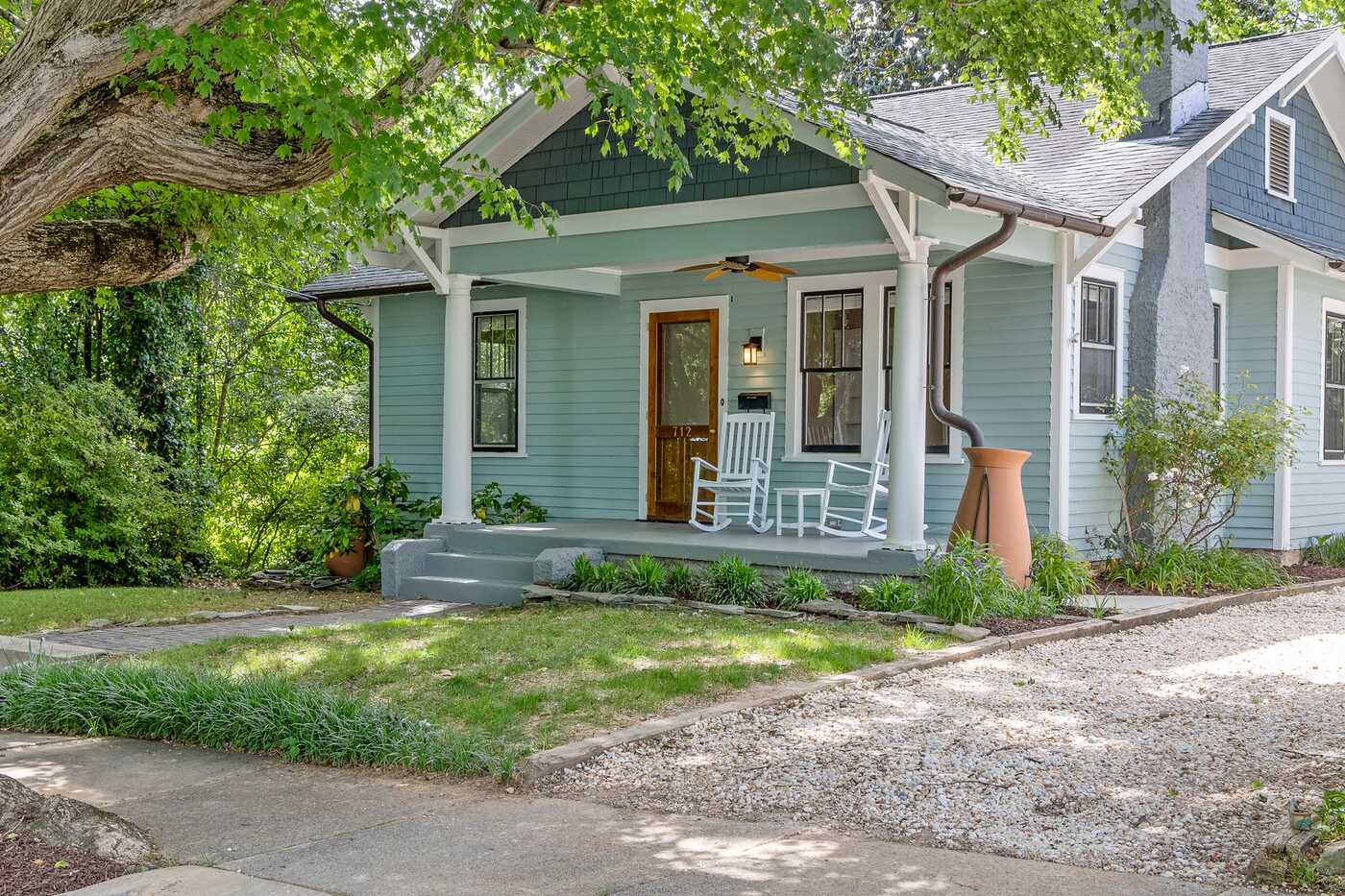
A buyer's inspector who reports droppings in the attic or a chewed soffit in a Fairmount or Ryan Place bungalow will usually trigger a repair request, and the seller's cleanest answer is a clearance letter from a licensed contractor after the openings are sealed. Buyers ask for the letter as a condition of closing. Sellers order it before listing so the question never comes up in negotiation.
Leases and move-outs
A tenant who reports rats wants proof the landlord acted. A landlord who has sealed and trapped wants a document that shows the unit was clear on the day the tenant moved in, or the day they moved out. The letter settles who is responsible for what happened in between.
HOA disputes
Townhome and condo boards in Fort Worth deal with rodent complaints that cross party walls and shared attics. A clearance letter for one unit shows whether that unit is the source, which is the fact the board needs before it can decide whose bill it is.
Insurance files
Where a claim involves gnawed wiring, contaminated insulation or a rodent-related repair, an adjuster may ask for a licensed contractor's written findings. The letter documents what was found, where, and what was done about it.
What the letter states and what it leaves out
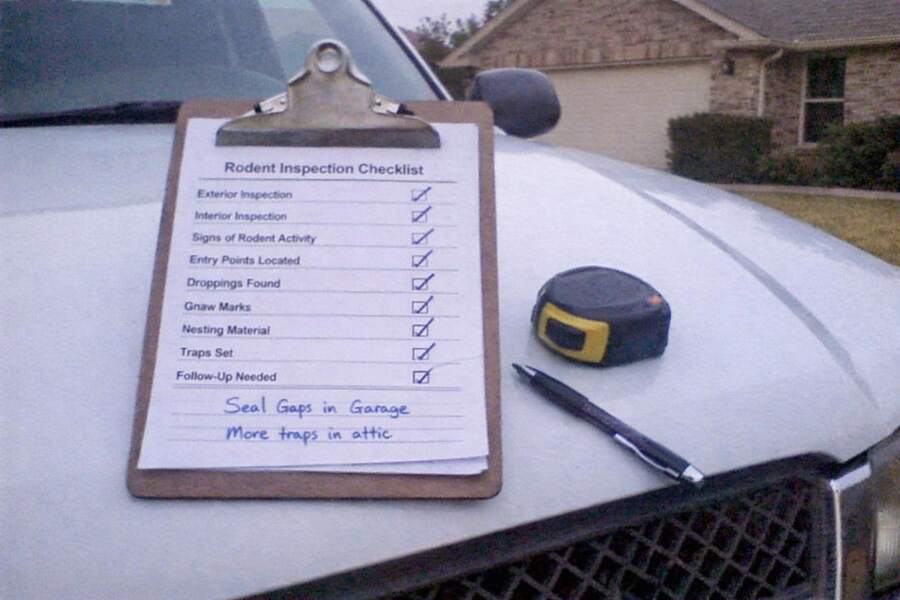
A useful clearance letter states six things: the date of inspection, the areas inspected, the species evidence found or the absence of it, each opening located and its closure, the trapping results if trapping was done, and a conclusion about active signs on that date. It also carries the contractor's TDA business license number and a signature.
- Date and address, with the name of the person who requested the letter
- Areas covered: roofline, attic, living space and garage, exterior perimeter, and the crawl space on a pier-and-beam house
- Evidence: droppings measured against the UF/IFAS roof rat figure of a quarter to half inch, banana shaped and pointed at the ends, plus rub marks, gnawing, nests or none of these
- Openings: every gap found at the soffit and fascia, gable and ridge vents, plumbing stacks, roof returns, weep holes, garage door and chimney, with the closure material used
- Trapping: the number of animals removed and the date of the last capture, where trapping was part of the job
- Conclusion: whether active rodent signs were present on the inspection date
A clearance letter is a finding about one property on one day. It does not predict what a neighbor's untrimmed live oak will do next season and it does not stand in for a warranty on the sealing work. Any warranty on exclusion is a separate document between the homeowner and the contractor, and a homeowner should ask the contractor for those terms in writing before the work starts.
How a clearance letter is produced
The letter comes at the end of an exclusion-first sequence: inspect, seal, trap where needed, verify, then write. When the free inspection finds a sound roofline and no signs inside, the letter can follow from the inspection alone. When it finds openings or activity, the letter waits until the work is done and a return visit confirms the attic is quiet.
Inspection to the quarter-inch standard
Whoever attends checks every opening against a quarter inch, which UF/IFAS publishes as the rat-proofing standard because a mouse passes a quarter inch and a rat passes half an inch. On a Fort Worth house that means the soffit and fascia joint, gable and ridge vents, the plumbing stacks, roof returns, weep holes in brick veneer, the garage door seal and the chimney. On a pier-and-beam house it also means the skirting and foundation vents.
Sealing before the letter
Openings are closed with galvanized hardware cloth, sheet metal and mortar. Expanding foam on its own is a gnawable material and a letter written over foam-only sealing is a letter that will be wrong within a season. The exclusion page compares the materials in detail.
Trapping and verification
Snap traps go on the runs the inspection found. UF/IFAS advises leaving traps a full week at minimum because roof rats avoid new objects, so the verification visit is booked at least a week after sealing. Trapping is preferred over rodenticide in a clearance job because a poisoned rat that dies in a wall void produces the odor complaint that undoes the letter; UF/IFAS notes that trapping reduces that risk.
Writing the letter
The contractor writes the letter after the verification visit, with the closure list attached and the license number on the page.
How long does it take to get a rodent clearance letter?
A clearance letter on a clean property can be written after one visit, and a property with activity takes one to several weeks depending on the size of the population. The sealing itself is usually a single day. The wait after that is for the traps and the return visit.
HomeGuide's national figures put trapping a small number of animals at two to three days and a severe infestation at one to two months, and the letter follows the last capture plus a verification visit. A seller under contract in Fort Worth should count backward from the closing date and book the inspection as early as the option period allows. A landlord with a move-in date has the same arithmetic.
Roof rats do the counting for you if you wait. UF/IFAS gives them sexual maturity at three to four months, gestation of three weeks, and four or five litters a year of five to eight pups, so a spring problem left alone is a much larger fall problem.
Can a clearance letter be issued if there are still rats?
A clearance letter cannot state that active signs are absent while animals are still in the structure, and a contractor who offers to write one anyway is offering a document that will fail the first time it is relied on. What can be issued in that case is an inspection report that records the findings and the recommended sequence, with the clearance letter to follow after the work.
This matters in a closing. A buyer who receives an honest inspection report and a scheduled exclusion date has something to negotiate with. A buyer who receives a clean letter and hears scratching the first night has a dispute. The report and the letter are two documents for two moments, and the routed contractor keeps them separate.
Homeowners on Reddit describe the reverse failure too: a company that sealed without trapping and left animals inside, or trapped for months without sealing. Either way the letter cannot be written, because the finding it certifies is false. The roof rat removal page explains the trapping side of that sequence.
What a clearance letter costs in Fort Worth
The inspection that produces a clearance letter is free, and the letter on a clean property costs nothing beyond it. On a property that needs work, the cost is the cost of the sealing and trapping, quoted line by line at the inspection and confirmed before anything starts.
| Line item | Here | National band (HomeGuide 2026) |
|---|---|---|
| Rodent inspection with written report | Free | $0 to $175 |
| Full-home exclusion before the letter | Quoted at inspection | $500 to $2,500 |
| Trapping and removal before the letter | Quoted at inspection | $250 to $1,200 |
| Attic cleanup if contamination is documented | Quoted separately | $600 to $2,500 |
The bands are national, since no Fort Worth-specific cost survey exists, and they describe typical jobs. The size of the house, the number of openings, whether there is a crawl space, and how many animals are inside move the quote inside those bands. A letter for a slab tract house in Alliance with two ridge vents to screen sits at the low end. A two-story pier-and-beam house in Arlington Heights with a crawl space, an open chimney and a live oak on the roof sits higher.
Why Fort Worth transactions run into rodent questions
Fort Worth housing produces rodent findings at inspection for two structural reasons: the pre-1949 pier-and-beam districts have a crawl space and an oak canopy on the roof, and the post-1990 slab subdivisions have builder-grade soffits and ridge vents. Both show up in a buyer's inspection report, and both lead to a request for a clearance letter.
In Fairmount, Ryan Place, Crestwood, Arlington Heights and the Cultural District, the houses have aged decking, more than one layer of shingles, old plumbing penetrations through the roof and skirting around the crawl space that has been patched for decades. A live oak limb touching the roof is the roof rat's route in; UF/IFAS describes the species as arboreal, moving along branches, wires and fence lines, and ranging about 150 yards from its den. A buyer's inspector who lifts the attic hatch in one of these houses in January is likely to find something, because calls in Fort Worth peak in January and February as the animals move in for warmth.
In Alliance, the far north ZIP codes and the Chisholm Trail corridor, the finding is usually a ridge vent with torn mesh or a gap where the roof meets the wall at a builder soffit, and on the edge of open pasture, displacement from cleared land. There are no basements anywhere in the city, so a Fort Worth letter covers the attic, the roofline, the perimeter and, where there is one, the crawl space.
The credential behind the letter is the Texas Structural Pest Control Act, Occupations Code chapter 1951, which requires a TDA business license and a certified applicator for rat and mouse work in the Pest Control category. Texas Parks and Wildlife has no role in a rat or mouse letter. The about page lists what the routed contractors are expected to hand over on every job.
What to check before accepting a clearance letter
A clearance letter is only as good as the license number on it and the inspection behind it, so check both. Five things separate a letter a title company will accept from a letter that is a sales receipt with a heading.
- Confirm the TDA structural pest control business license through the state's current-license lookup before the inspection, and check that the number on the letter matches.
- Ask that the letter list the areas inspected. A letter that skips the attic or the crawl space on a pier-and-beam house has not inspected the places rats live.
- Ask for the closure list with materials named. Hardware cloth and sheet metal on the list mean the sealing will hold; foam alone means it will not.
- Ask what warranty the contractor offers on the sealing, how long it runs and whether it transfers to a buyer, and get those terms in writing as a separate document.
- Ask how many follow-up visits are included and what happens if signs return after the letter is issued.
Whoever needs the letter, the booking is the same: call or send the form on the contact page, and someone answers the line 24 hours a day.
Services that usually go with this one
A Fort Worth job tends to run as a sequence, and these pages describe the steps on either side of this one.
- Rodent Inspection: A free walk of the roofline, attic, crawl space and yard that ends in a written report with each line priced on its own.
- Rodent Exclusion: Soffit returns, gable and ridge vents, plumbing stacks, weep holes and skirting closed in steel mesh and sheet metal.
- Roof Rat Removal: Snap trapping on the attic runs, timed with sealing, for the rat that climbs the oaks and the cable drops.
The about page explains how the parts fit together, and the phone is answered at any hour.
How a clearance letter is issued
Exclusion comes first in every routed job, and the letter is written only after the property is confirmed quiet.
-
Book the free inspection
Tell us who needs the letter and by when. A seller under contract or a landlord with a move-in date gets scheduled around that date.
-
Inspect to the quarter-inch standard
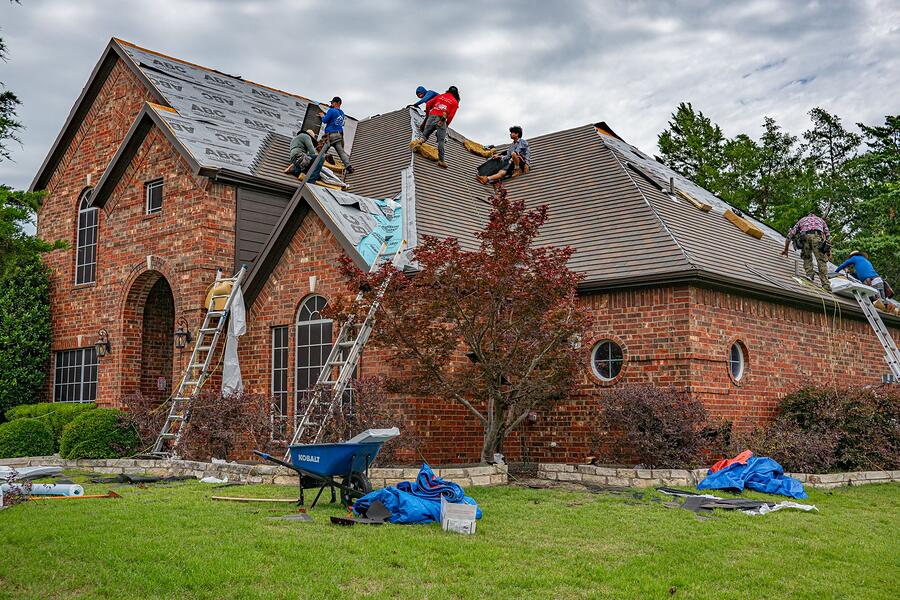
The contractor works the roofline from a ladder, reads the attic, walks the perimeter and checks the crawl space where there is one, measuring every opening against a quarter inch.
-
Seal, then trap
Openings are closed with hardware cloth, sheet metal and mortar, and snap traps go on the runs the inspection found.
-
Verify
A return visit at least a week later checks the traps and the attic for fresh signs. The letter waits until this visit is clean.
-
Write and sign
The contractor issues the dated letter with the license number, the closure list and the conclusion, ready for the closing, the lease file or the board.
Ready to start? Call (817) 710-2756 or Book a Free Inspection.
Why Fort Worth buyers, sellers and landlords use this route for a clearance letter
A letter is only worth what it can be checked against, which is why these three points are written into every one.
A document a title company can check
The letter carries the TDA structural pest control business license number of the contractor who wrote it, and that number can be confirmed in the state's current-license lookup in a minute. Every contractor we route holds that license under Occupations Code chapter 1951. A letter from an unlicensed handyman or a general contractor with no pest control category is a letter a buyer's attorney can reject, and often does.
Texas Structural Pest Control Act, Occupations Code chapter 1951: business license and certified applicator required
Written to a published standard
Every opening on the closure list is measured against a quarter inch, the rat-proofing standard published by UF/IFAS, because a mouse passes a quarter inch and a rat passes half an inch. That gives the letter a benchmark anyone can look up. A letter that says the house was sealed says little; a letter that says every gap over a quarter inch at the soffit, vents, stacks and skirting was closed with metal says something a buyer can rely on.
UF/IFAS: quarter inch is the rat-proofing standard
Free inspection, no charge for a clean letter
A standalone rodent inspection runs from nothing to $175 nationally in HomeGuide's 2026 figures, and a seller who needs three documents before closing feels every one of those fees. Here the inspection is free and a letter on a property with no findings costs nothing more. When work is needed, it is quoted line by line so the seller, the buyer or the board can see what the letter cost and why.
HomeGuide 2026: standalone rodent inspection $0 to $175 nationally
What Reddit Says About Rodent Clearance Letters in Fort Worth
Homeowners in r/pestcontrol, r/HomeImprovement and r/homeowners rarely use the phrase clearance letter, but they describe the need for one constantly: a buyer's inspector found droppings, a landlord says the unit was fine, a neighbor's rats are somebody else's problem. What they advise is documentation. Get more than one bid for the same scope, get every quote itemized so the sealing, the trapping and any cleanup are separate lines, and ask up front whether the company does the repair work or only sets traps.
The red flags they warn each other about are the ones that ruin a letter. A company that only baits and never touches the roofline. The line that poison makes rats go outside to find water, which the threads call a myth and treat as a sign of dishonesty. Trapping that runs for months with no sealing, which one commenter described as harvesting rodents. Sealing that leaves animals inside. Any of these produces a property that cannot be certified clear.
The questions they tell each other to ask map onto the letter directly: what exactly is included, whether the sealing is warrantied and for how long, whether cleanup is part of the job, how many follow-up visits are included, and what happens if the animals come back. A homeowner who brings those questions to the inspection gets a letter that answers them.
The threads also carry the part a document cannot fix: people who could not sleep for weeks and were told they were being dramatic, and who wanted someone with a license to write down that the noise was real. A letter does that too.
The contractors we route write that letter after the property has been sealed, trapped and checked.
A typical clearance letter request in Fort Worth
The situation: A seller in Ryan Place is ten days into the option period on a 1920s Tudor when the buyer's inspection report comes back with droppings along the attic top plate and a gap at the skirting on the crawl space. The buyer's agent asks for a clearance letter from a licensed pest control company before closing, which is three weeks out. The seller has heard nothing in the attic and had assumed the house was fine.
What gets done: Whoever attends the free inspection finds a soffit return under a live oak limb rubbed dark and open, a chimney with no cap, and two foundation vents on the crawl space with rusted screens. The attic shows droppings of the roof rat size and a run through the blown insulation over the back bedroom. The contractor writes an inspection report the same day, closes the three roofline openings with hardware cloth and sheet metal, screens the foundation vents to the quarter-inch standard, sets snap traps on the marked run, and books the return visit for the following week.
How it turns out: The return visit finds two captures in the first days and nothing fresh after that. The contractor issues the dated clearance letter with the closure list and the TDA license number, the seller's agent forwards it to the buyer's side, and the sale closes on schedule. The seller keeps a copy with the transaction papers.
Clearance letter questions from Fort Worth homeowners
These are the questions that come up when a letter is needed for a closing, a lease or a board.
Call (817) 710-2756Is a rodent clearance letter the same as a termite letter?
A rodent clearance letter and a termite letter are different documents about different animals, though both come from a contractor holding a TDA structural pest control license. The termite report is a standardized wood-destroying insect form that lenders often require. The rodent letter is a written inspection report that a buyer, landlord, board or adjuster asks for when rodent signs have been found, and its format is set by the contractor rather than by a lender form. Ask for both if a buyer's inspection raised both, and expect them to be issued separately.
Can I get a clearance letter without any work being done?
A letter can be issued from the free inspection alone when the inspection finds no active signs and no openings over a quarter inch at the roofline, the perimeter and the crawl space. That is the common outcome on a house that has been sealed properly in the past. When the inspection finds openings, the letter waits until they are closed, and when it finds animals inside, it waits for trapping and a verification visit. The inspection report is available in either case, and it records what the letter will need.
How fast can a letter be issued before closing?
A clean property can have its letter the day of the inspection, and a property that needs sealing and trapping usually needs one to three weeks between the first visit and the letter. HomeGuide puts trapping a few animals at two to three days nationally, and the verification visit is scheduled at least a week after sealing because roof rats take time to accept traps. Book as early in the option period as possible, tell whoever answers the closing date, and the visits are arranged around it.
Does a clearance letter guarantee the rats will not come back?
The letter states the condition of the property on the date it was written, and it says nothing about next season. What protects the buyer after closing is the sealing behind the letter, and any warranty on that sealing is a separate agreement with the contractor. Ask the contractor what warranty they offer on exclusion, how long it runs, whether it is renewable, and whether it transfers to a new owner, and get the answer in writing. A buyer can then keep two documents: the letter for the file and the warranty for the future.
Will an HOA accept a letter for one unit in a shared building?
Boards generally accept a letter that names the unit inspected, lists the areas covered and states the findings, because that is the fact they need to decide whether that unit is the source of a complaint. In a townhome row with a shared attic, the letter should say whether the party wall or the shared attic space was accessible and what was seen there. The contractor can inspect adjoining units in the same visit when the owners agree, which gives the board a single report across the row. Ask the board what it wants the letter to state before booking.