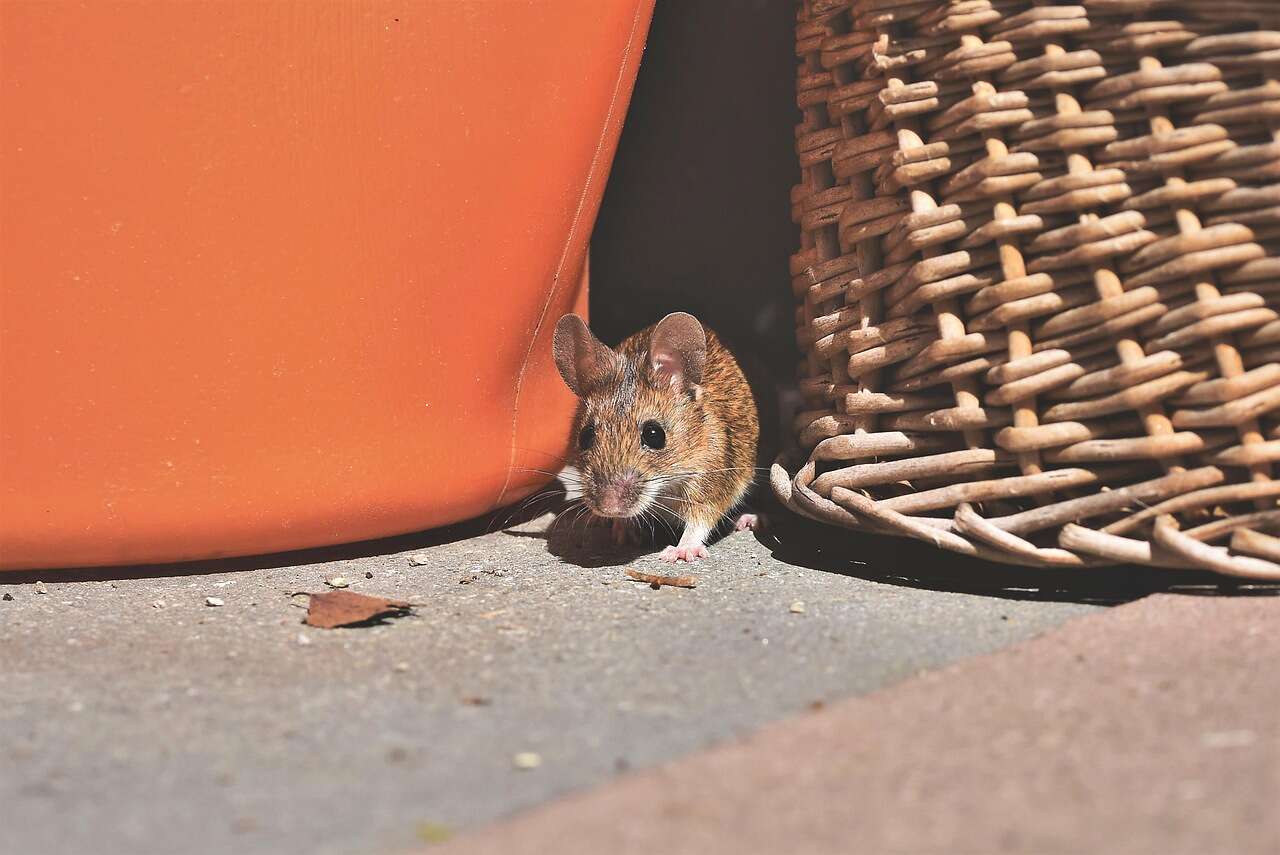
Mouse Removal in Fort Worth, TX
House mice get into a Fort Worth home under the garage door, through weep holes in the brick and the gap beneath an exterior door. Removal means closing every opening to a quarter inch and trapping what is already inside.
- Openings closed to a quarter inch
- Snap traps, no bait indoors
- Answered 24 hours a day
What mouse removal in Fort Worth includes
Mouse removal on a Fort Worth house includes a free inspection at ground level, sealing of every opening a quarter inch or larger, snap trapping inside the kitchen, garage and wall voids, and a return visit to confirm the catches have stopped. The quote from the inspection prices those pieces on separate lines.
Inspection at ground level
House mice enter low, so whoever attends works the perimeter at the slab or the skirting instead of the roofline: the garage door seal and its bottom corners, weep holes in the brick veneer, the gap under each exterior door, the penetrations where gas, water, electrical and air conditioning lines pass through the wall, and the dryer vent. Inside, the kitchen cabinet voids, the toe kicks, the space behind the range and the dishwasher, and the water heater closet are checked for droppings and gnawed packaging. The free rodent inspection page describes the visit.
Sealing to a quarter inch
UF/IFAS gives a quarter inch as the opening a mouse can pass, so every gap that size or larger is closed: copper mesh packed into weep holes so the brick can still breathe, a new bottom seal on the garage door, door sweeps on exterior doors, escutcheons and mesh-backed sealant at utility penetrations. The rodent exclusion page covers the materials.
Trapping inside
Snap traps go along the walls where the droppings are, in cabinet corners, behind appliances and along the garage perimeter, and the contractor returns to clear and reset them.
Verification
A return visit checks for fresh droppings and empty traps before the job is signed off, and any cleanup of a contaminated cabinet or garage corner is priced on its own line.
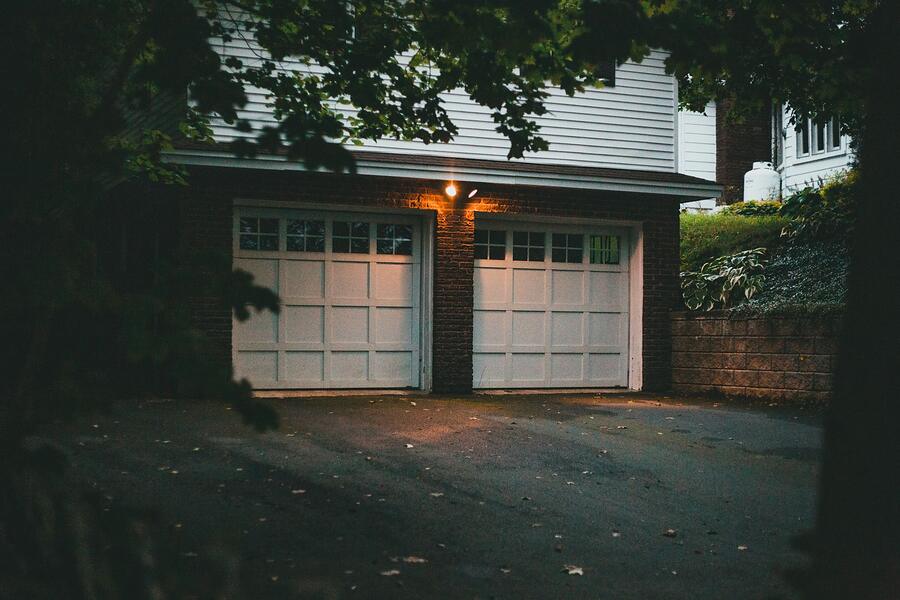
Signs of mice in a Fort Worth house
The first sign of mice in a Fort Worth house is usually droppings in a kitchen drawer or along the garage wall, found in daylight, with the noise coming second: a light, fast scratching inside a cabinet or a wall after the house goes quiet. The evidence is small and it is close to the floor.
- Small dark droppings in cabinet corners, drawers, the pantry and along the garage baseboard, far smaller than the quarter-to-half-inch pointed droppings that UF/IFAS attributes to a roof rat.
- Gnawed corners on cereal boxes, pet food bags and birdseed, with crumbs scattered around the hole.
- A shredded nest of paper, fabric or insulation behind a drawer, in the base of a range, or in a garage shelf box.
- A faint musky smell inside a closed cabinet.
- Scratching or rustling inside the kitchen wall or under the cabinets at night, and a pet that stares at a toe kick.
- A tunnel in the insulation of the wall void behind the garage, found when the inspection opens the water heater closet.
Weeks of lying awake listening for a sound the rest of the household waves off are common, and mice make it worse because the evidence is easy to miss. A single set of droppings in a drawer settles it.
Snap traps, glue boards, bait stations and sealing compared
Sealing plus snap trapping is the method licensed contractors use for mice inside a Fort Worth home, because it removes the animals present and closes the way in for the next ones. Glue boards and bait stations each have a narrow place, and neither ends a job on its own.
Snap traps
A mouse snap trap set flush to the wall on a run catches the animal where it travels and leaves the carcass where it can be collected. They are cheap, they can be set in numbers, and they belong in cabinet corners, behind appliances and along the garage wall.
Glue boards
Glue boards catch mice alive and hold them until someone deals with them, which means a slow death and a noise in the cabinet at two in the morning. They collect dust and lose their grip in a hot garage. Some contractors use them as monitors to confirm a run; few use them as the removal method in a home.
Bait stations
Rodenticide in a tamper-resistant station has a place outdoors under a certified applicator and almost none inside a kitchen. The EPA notes that most rodenticides are anticoagulants and that death typically comes four days to two weeks after the animal starts feeding, so a mouse that ate in a garage station has time to die inside the wall behind the pantry. UF/IFAS notes that trapping avoids that outcome, and the dead rodent removal page describes what follows when it is ignored.
Sealing
Sealing is the only method that changes next winter, and a mouse job that skips it is a trap-emptying subscription.
| Method | Removes mice inside | Stops new entry | Main drawback |
|---|---|---|---|
| Snap traps alone | Yes | No | Catches continue as long as the door gap is open |
| Glue boards alone | Partly | No | Live animal in the trap, weak in heat and dust |
| Bait stations alone | Partly | No | Carcass in a wall, pets and children near bait |
| Sealing alone | No | Yes | Leaves the current mice inside |
| Sealing plus snap traps | Yes | Yes | More up front than any single method |
How long does it usually take to get rid of mice?
A small number of mice in a sealed Fort Worth house is usually trapped out in two to three days, and a long-standing population takes one to two months, using HomeGuide's national trapping figures. The sealing is normally done in a single visit, and the traps stay down until several checks in a row come back empty.
The timeline stretches when the sealing is skipped, because a garage door with a worn bottom seal admits the next mouse from the fence line the night after the last one is caught. It also stretches when the traps are set in convenient places instead of on the runs, which is why the inspection maps the droppings first. Mice accept a new trap faster than a roof rat does, so a mouse trap that sits untouched for a week is usually in the wrong spot.
Two Fort Worth seasons drive the calls. A January cold snap pushes mice from the yard into the garage and the kitchen wall, and a summer attic at 130 degrees and more pushes any rodent in the house down into the cooler wall voids and the garage. In both cases the sealing list is the same, and the sooner it is done the shorter the trapping.
What is the cheapest way to get rid of mice?
The cheapest way to get rid of mice for good is to close the openings once and snap trap the animals already inside, because every cheaper option is paid for again at the next cold front. A homeowner can do a real share of this without a contractor.
Store-bought snap traps set flush to the wall in cabinet corners and along the garage perimeter cost a few dollars, and a new bottom seal on the garage door, door sweeps on exterior doors and copper mesh packed into the weep holes are hardware-store purchases. What a homeowner usually cannot do is find every quarter-inch opening at the utility penetrations and behind the cabinets, and the missed one keeps the traps busy. A monthly bait-station plan is the other low-entry option, and over a year it often costs more than a one-time sealing job while the door gap stays open.
The way to keep a professional job affordable is the itemized quote from the free inspection. Sealing, trapping, follow-ups and any cleanup arrive as separate lines, so the sealing can be booked now and the rest declined or taken to a second contractor for comparison.
What mouse removal costs in Fort Worth
Mouse removal on a Fort Worth house is priced from the number of openings to close, the length of the perimeter, how long the mice have been inside, and whether a cabinet void or garage corner needs cleaning afterward. No Fort Worth-specific cost survey exists, so the bands below are HomeGuide's 2026 national figures, and the free inspection turns them into a number for one house.
| Line item | National band (HomeGuide 2026) | What moves it |
|---|---|---|
| Rodent inspection | $0 to $175 (free here) | Charged elsewhere as a first visit |
| Trapping and removal | $250 to $1,200 | Number of mice, number of return visits |
| Full-home exclusion | $500 to $2,500 | Openings found, perimeter length, brick veneer weep holes |
| Dead rodent removal | $150 to $500 | Whether a wall or cabinet base must be opened |
| Cleanup and decontamination | $600 to $2,500 | Dropping density, nests, odor |
A mouse job usually sits toward the low end of each band because the animals are small, the openings are at ground level and a ladder is rarely needed. What pushes a quote up is a long brick perimeter with dozens of weep holes, a detached garage, or mice that have been in a wall void long enough to need cleanup. A quote that arrives as one total with no lines is the one to question.
Where mice get into Fort Worth houses
Mice get into Fort Worth houses at ground level, and the openings they use are the same on a slab tract house in Alliance and a pier-and-beam bungalow in Fairmount: the garage door, the brick veneer, the exterior doors and the utility penetrations. House mice are a distant third behind roof rats and Norway rats here, so most calls that start as a mouse question end as a rat job.
Garage doors and brick veneer
Post-1990 slab homes in the far north and the Chisholm Trail corridor have builder-grade garage door seals that wear at the corners and brick veneer with open weep holes along every course above the slab. Both are quarter-inch openings by design or by wear. Copper mesh in the weep holes keeps the drainage working while closing the gap.
Older houses and crawl spaces
On a pre-1949 pier-and-beam house the skirting, the foundation vents and the gaps where old plumbing rises through the floor let mice into the wall voids from below, and the kitchen is usually the first room they reach. The crawl space rodent exclusion page covers that work.
Season and pasture edge
Calls climb in the fall and peak in January and February, which is why the sealing list should be finished before October. Subdivisions on the edge of open pasture in the far north and southwest see more pressure each time the next field is cleared. There are no basements in Fort Worth, so the garage and the kitchen wall are where mice settle.
Who is allowed to do the work
Rats and mice fall under the Pest Control category of the Texas Structural Pest Control Act, Occupations Code chapter 1951, which requires a business license from the Texas Department of Agriculture's Structural Pest Control Service and a certified applicator. Every contractor we route holds a TDA structural pest control business license, and it can be confirmed through the TDA current-license lookup before the visit. Texas Parks and Wildlife has no role in a mouse job.
What to ask before hiring a mouse contractor
Five questions separate a mouse job that ends from one that repeats: whether the TDA license is current, whether the quote is itemized, what material closes each opening, what the sealing warranty says in writing, and how many return visits are included.
- Confirm the business through the TDA Structural Pest Control Service current-license lookup, and ask which certified applicator is attending.
- Ask for the quote in lines: sealing, trapping, follow-ups and cleanup, with any ongoing plan on its own line so it can be refused.
- Ask what closes each opening. Copper mesh in the weep holes, a new garage door seal, door sweeps and mesh-backed sealant are answers; foam alone at a weep hole blocks the drainage and gets chewed.
- Ask what the warranty on sealing covers, how long it runs and whether it renews, and read the terms before comparing prices.
- Ask how many return visits are included and what happens if droppings reappear after the last one.
The about page explains what the routed contractors are expected to hand over on every job, and the contact page handles the booking, and a person answers the number around the clock.
Services that usually go with this one
A Fort Worth job tends to run as a sequence, and these pages describe the steps on either side of this one.
- Rodent Exclusion: Soffit returns, gable and ridge vents, plumbing stacks, weep holes and skirting closed in steel mesh and sheet metal.
- Rodent Inspection: A free walk of the roofline, attic, crawl space and yard that ends in a written report with each line priced on its own.
- Roof Rat Removal: Snap trapping on the attic runs, timed with sealing, for the rat that climbs the oaks and the cable drops.
The about page explains how the parts fit together, and the phone is answered at any hour.
How a house mouse problem is worked
The four stages, in order.
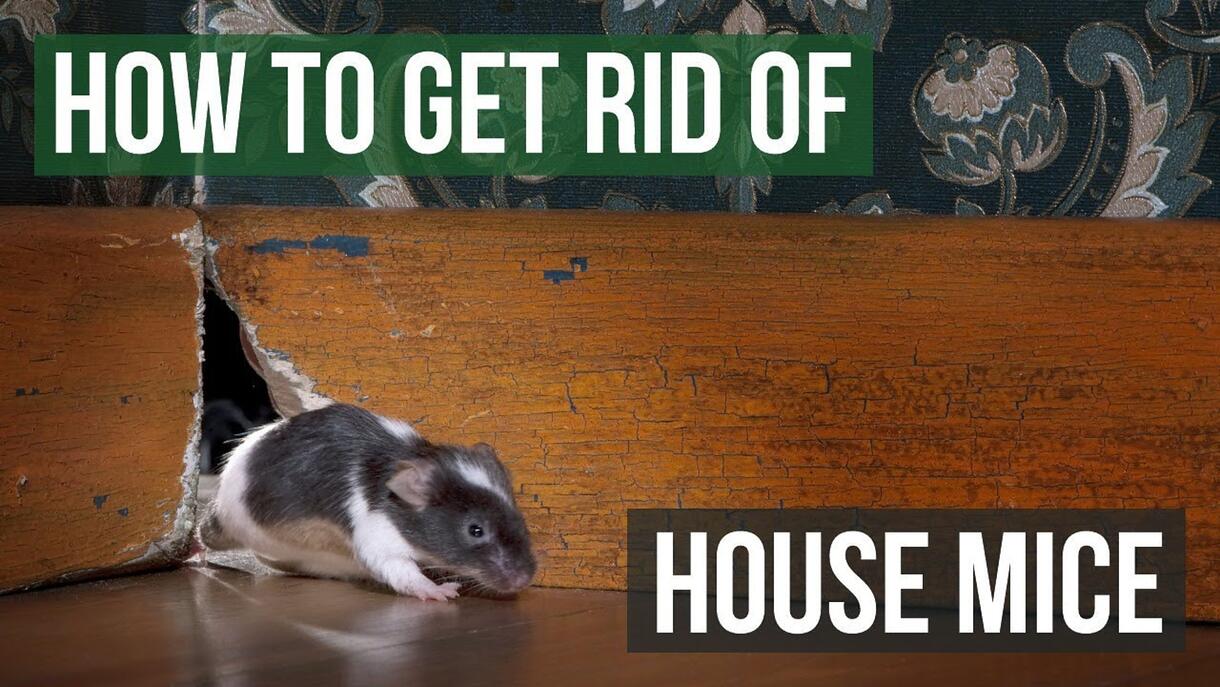
Video: How to Get Rid of House Mice, from Solutions Pest & Lawn.
How a mouse removal runs in Fort Worth
Sealing is the spine of the job, and the snap traps go down on the same visit so the mice inside are removed while the way in is closed.

-
Free inspection at ground level
Whoever attends checks the garage door seal, the weep holes, the door gaps and the utility penetrations, then reads the kitchen cabinets and the garage for droppings and runs.
-
Seal every opening to a quarter inch
Copper mesh goes into the weep holes, the garage door gets a new bottom seal, exterior doors get sweeps, and utility penetrations are closed with escutcheons and mesh-backed sealant.
-
Trap the kitchen and garage
Snap traps are set flush to the wall on the runs the droppings mark out, and the contractor returns to clear and reset them until the catches stop.
-
Verify and clean if wanted
A return visit confirms no fresh droppings and empty traps, and any cleanup of a cabinet void or garage corner is done on its own line after that.
Ready to start? Call (817) 710-2756 or Book a Free Inspection.
Why Fort Worth homeowners route mouse work here
Mouse work goes wrong in three predictable places, and these are the three that get handled differently on this route.
No bait inside the kitchen
A mouse that feeds at a bait station does not die at the station. The EPA notes that most rodenticides are anticoagulants and that death follows four days to two weeks after feeding begins, which is long enough for the animal to reach the wall void behind the pantry. Every job we route uses snap traps inside the house and keeps any rodenticide outdoors in tamper-resistant stations under a certified applicator, so the removal ends with a carcass in a trap instead of a smell in a wall.
EPA: anticoagulant rodenticides kill 4 days to 2 weeks after feeding begins
The perimeter is closed before the traps go down
Sealing is priced on its own line and done first, because a trap under the sink does nothing about the worn garage door seal that let the mouse in. Full-home exclusion runs from $500 to $2,500 nationally in HomeGuide's 2026 figures, and a mouse job on a Fort Worth slab house usually sits low in that band because the openings are at ground level and reachable without a ladder. The free inspection lists each one so the number can be checked against a second bid.
HomeGuide 2026: full-home exclusion $500 to $2,500 nationally
A TDA-licensed contractor on every mouse job
Mice are covered by the Pest Control category of the Texas Structural Pest Control Act, so the business that traps or baits them for hire needs a Texas Department of Agriculture structural pest control business license and a certified applicator. Every contractor we route holds that license, and the number can be confirmed through the TDA current-license lookup before anyone arrives. A handyman with a box of traps is working outside the Act.
Texas Occupations Code chapter 1951: rats and mice under the Pest Control category
What Reddit Says About Mouse Removal in Fort Worth
Homeowners on r/pestcontrol, r/HomeImprovement and r/homeowners give the same advice for mice that they give for rats: collect several bids for the same scope, insist that each quote is itemized into sealing, trapping and cleanup, and prefer a local operator to a national brand. They ask early whether the company will do the sealing work or only set traps, because a trap-only company leaves the door gap for someone else.
The warnings are consistent. Bait-only plans with no sealing draw the sharpest criticism, and the claim that poison makes a mouse go outside to look for water is treated as a mark of a dishonest salesman. A monthly monitoring contract folded into the removal price is another, with figures like $130 a month plus a bimonthly fee appearing in one thread. Trapping that runs for months with nothing sealed is described as harvesting rodents.
Entry-point education lands well in the threads, and the questions they tell each other to ask follow from it: what exactly is included and what is a separate line, whether the sealing is warrantied and whether it renews, whether cleanup is part of the job, how many follow-up visits are included, and what happens if the mice come back.
Timelines surprise people most, with two months described as common and four months with no resolution appearing more than once, nearly always where nothing was sealed. Dead-animal smell in a wall after baiting is the other recurring regret.
The contractors we route seal the perimeter first, trap inside, and put every line in writing.
A typical mouse call from a Fort Worth garage and kitchen
The situation: A family in a 1960s brick ranch in the Wedgwood area finds droppings in the silverware drawer the week after a January cold snap, then hears rustling inside the kitchen wall at night and finds a chewed bag of dog food on the garage floor. They set two traps from the hardware store and catch one mouse, and the droppings keep coming. One of them has started checking the drawer every morning before coffee.
What gets done: Whoever attends the free inspection finds the bottom seal on the garage door worn flat at both corners, a row of open weep holes in the brick along the garage wall, a half-inch gap under the door from the garage into the kitchen, and an unsealed hole where the water line enters behind the dishwasher. Droppings run along the garage baseboard, into the cabinet void under the sink and along the toe kick. The written findings list the four openings and price sealing, trapping, one return visit and an optional cabinet cleanup separately. The contractor fits a new garage door seal and a sweep on the kitchen door, packs the weep holes with copper mesh, closes the water line penetration with mesh and sealant, and sets snap traps flush to the wall on the marked runs.
How it turns out: The traps catch for the first few days and then sit empty. The return visit finds no new droppings in the drawer or the garage, the wall is quiet, and the family takes the cabinet cleanup line the following week. The itemized findings go in the folder with the house papers.
Mouse questions from Fort Worth homeowners
These are the questions that come up on nearly every mouse call in Fort Worth.
Call (817) 710-2756How do I tell mouse droppings from rat droppings?
Size settles it. UF/IFAS describes roof rat droppings as a quarter to half an inch long, curved like a small banana and pointed at both ends, and mouse droppings are much smaller than that, closer to a grain of rice. Location helps too: mouse droppings collect in drawers, cabinet corners and along the garage baseboard, while roof rat droppings collect along attic top plates and on ductwork. The free inspection names the animal from the evidence, and if the answer is a roof rat, the work moves to the roofline and the roof rat removal page describes it.
How small a hole can a mouse get through?
A mouse can pass an opening of a quarter inch, and a rat half an inch, according to UF/IFAS, which is why a quarter inch is the standard every opening is measured against. On a Fort Worth house that size describes a worn corner on a garage door seal, an open weep hole in brick veneer, the gap under an exterior door with no sweep, and the space around a water or gas line where it enters the wall. Anything that size or larger is closed on a routed job, and the inspection lists each one so the homeowner can see where the mice came in.
Why did the mice show up after a cold snap?
Cold drives them in. Mice living in a fence line, a woodpile or a shed move toward the nearest warm structure when a January front comes through, and a garage with a worn door seal is the easiest warm structure on the block. From the garage, the gap under the door into the house and the utility penetrations behind the appliances lead to the kitchen. That is why Fort Worth calls peak in January and February, and why the openings should be closed before October, ahead of the first front.
Can I just put out poison and be done with it?
Poison inside a house trades a mouse in a drawer for a mouse in a wall. The EPA notes that most rodenticides are anticoagulants and that death typically comes four days to two weeks after the animal starts feeding, so the mouse has time to return to the void behind the pantry and die there. UF/IFAS lists that outcome as the reason to trap indoors. Bait also does nothing about the door gap, so the next mouse follows the last one in. Sealing plus snap traps ends the job; bait on its own postpones it.
Will sealing the weep holes hurt the brick?
Weep holes exist to let moisture out from behind the brick veneer, so they should be closed with a material that stops a mouse and lets water and air through, which is why routed jobs pack them with copper mesh or fit purpose-made weep hole covers. Expanding foam or mortar in a weep hole blocks the drainage and can trap moisture in the wall, and foam is chewed through in a season besides. Ask whoever attends what goes in the weep holes; the answer tells you a lot about the rest of the job.