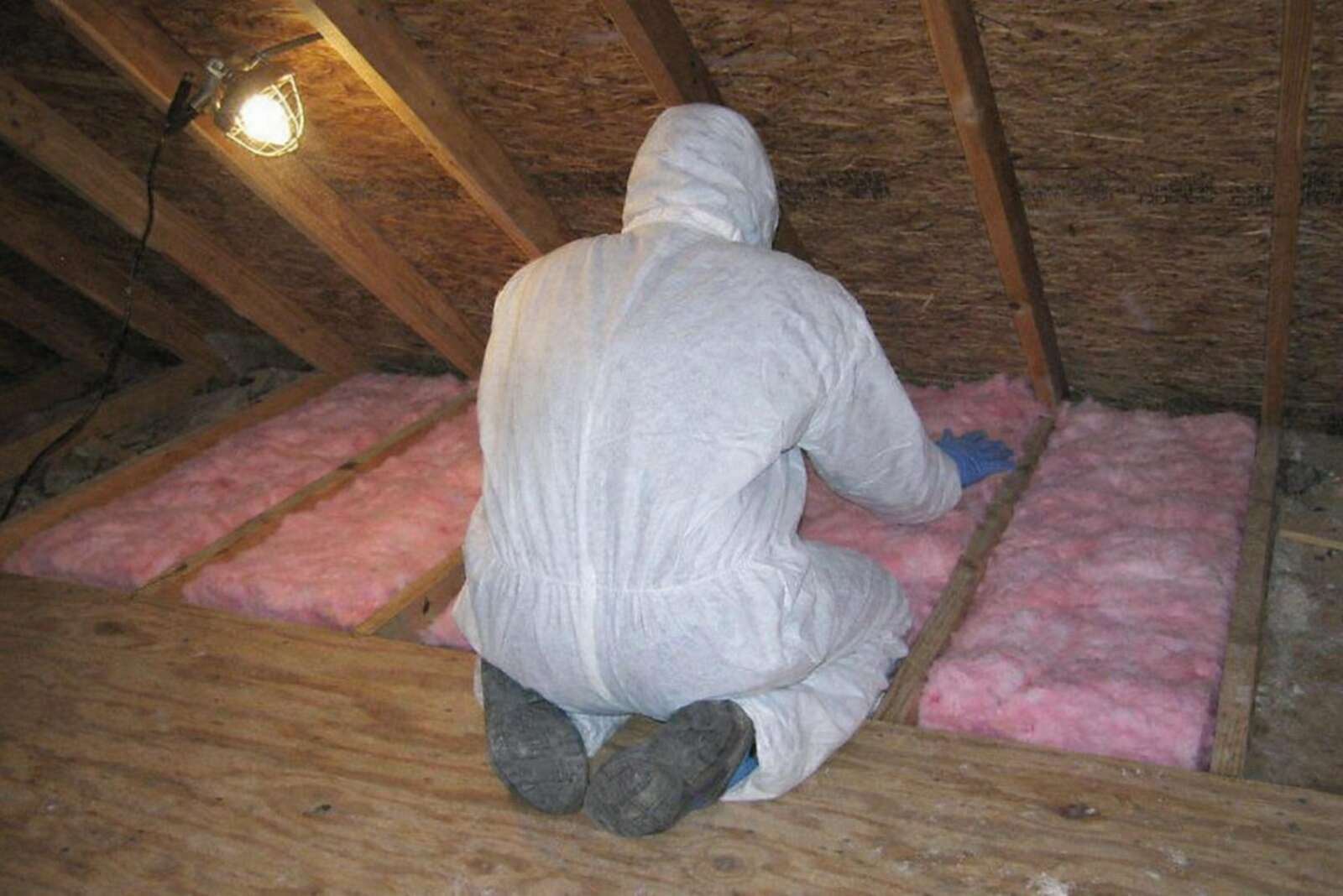
Attic Insulation Replacement in Fort Worth, TX
Blown insulation that rats have tunneled through and soaked no longer does its job. Replacement strips the flattened and wet material, cleans the attic floor, and blows fresh insulation back to full depth, after the roofline is sealed so it is done once.
- Re-blown after the sealing
- Priced per square foot, own line
- Answered 24 hours a day
What attic insulation replacement covers
Insulation replacement covers three things: removal of the contaminated blown insulation, preparation of the bare attic floor, and installation of new insulation to the depth the attic should have had. It follows attic cleanup in the sequence and is quoted on its own line, so the removal, the cleaning and the new material each carry a visible number.
Removal
The old blown fiberglass or cellulose is drawn out with an insulation vacuum through a hose run from the hatch to a truck or the driveway, then bagged for disposal. Where only the runs and wet patches are affected, removal is limited to those areas. Where the attic has been used through more than one winter, everything comes out.
Preparation
With the floor bare, droppings and nests on the drywall and joists are picked up and HEPA vacuumed, the surfaces are sanitized, urine-stained wood gets an odor treatment, and whoever attends checks for chewed wiring, crushed ducts and gaps in the ceiling plane. Air-sealing the ceiling penetrations while they are exposed is a small extra with a real payoff in a hot climate.
Installation
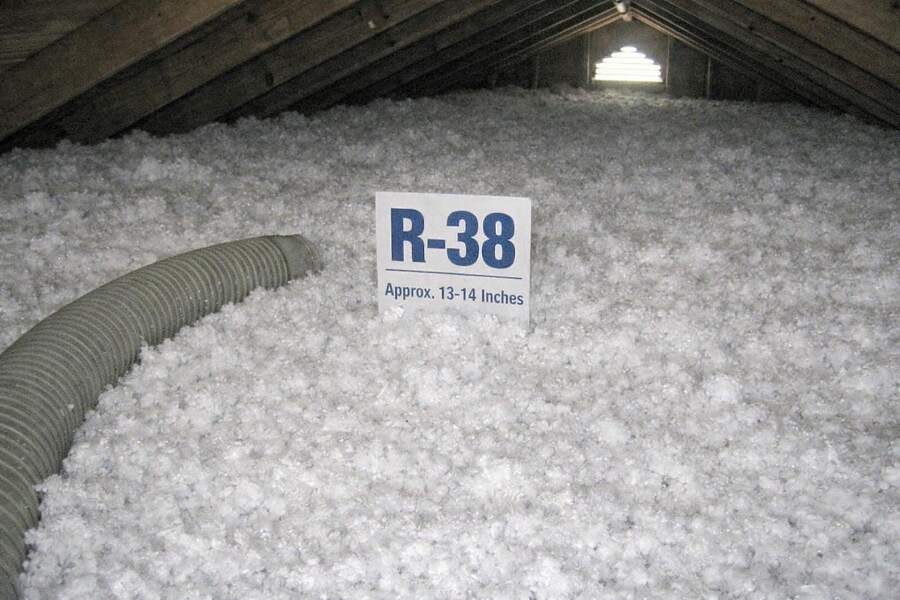
New blown fiberglass or cellulose is installed with a blowing machine and hose to a marked depth, with baffles at the eaves so the soffit vents stay open and the material does not slide into them. The depth is checked against rulers set on the joists before the crew leaves.
- Vacuum removal of contaminated blown insulation, targeted or complete
- Bagging and disposal of the removed material
- Cleaning and sanitizing of the exposed attic floor
- Eave baffles and depth markers
- Fresh blown insulation to the agreed depth
- A written note of any wiring, duct or decking damage found
Signs the insulation has to come out
Insulation comes out when it is compressed, wet or nested in, and a flashlight from the hatch usually shows which. Blown insulation that rats have used looks different from insulation that has settled with age: settled material is even and low across the whole attic, while rat-used material has runs pressed through it like paths through tall grass, with a raised edge on either side and droppings along the bottom.
- Runs and tunnels pressed flat between a vent and a warm spot such as the water heater flue or a duct trunk
- Dark, clumped or matted patches where urine has soaked through and dried
- Nest pockets hollowed into the material and lined with shredded paper, fabric or the insulation itself
- Droppings visible on the surface and, when the top is brushed aside, layered underneath
- An ammonia smell that sharpens on hot afternoons and fades overnight
- Bare drywall showing between joists where the material has been pushed aside entirely
The energy side is the other sign. The Department of Energy notes that compressed insulation does not deliver its rated R-value and that wet insulation performs poorly, which is why a house with a rat-used attic tends to have rooms under it that run hot in August and cold in January while the bills climb. Homeowners often notice the bills before they notice the attic, and it is common to feel foolish for having lived under it for so long. The attic photographs from the free inspection show how much has to go, and the cause is almost always clearer than the blame.
Why new insulation goes in after the sealing
New insulation goes in after the roofline is sealed and the trapping is finished because fresh blown insulation is the best nesting material a rat could ask for, and a re-blown attic with an open ridge vent is a ruined attic by February. The contractor we route holds to the order exclusion first, trapping second, cleanup and re-blow last, and the insulation is the last thing on the list for a reason.
Exclusion closes the openings in materials rats cannot chew: hardware cloth behind ridge and gable vents, sheet metal at soffit-fascia gaps and roof returns, copper mesh packed into plumbing stack and cable penetrations, a screened chimney cap. Trapping then clears the attic, and UF/IFAS advises leaving traps at least a week because roof rats avoid new objects on their routes. Only once the traps have been empty through consecutive checks does the old material come out, and the new goes in the same week. The exclusion page covers the sealing work.
There is a second reason for the sequence, and it is the one that costs people money. Removal exposes the ceiling plane and the eaves, which is the only time the underside of the roofline can be checked from inside for daylight and the ceiling penetrations can be air-sealed. A contractor who re-blows before sealing has to strip the attic again to get at any opening found later. Doing it once, in order, is the whole difference between a single bill and two.
Targeted removal, full removal and blowing over the top compared
Three approaches to a rat-used attic get quoted, and the difference between them is how much of the old material stays.
Targeted removal and top-up
Targeted removal strips the runs, nests and wet patches, sanitizes, and blows fresh material into the stripped areas and over the rest to bring the whole attic to depth. It fits a short infestation on one route through an otherwise clean, dry attic. Whoever attends should show you in the photographs where the contamination ends.
Full removal and re-blow
Full removal takes everything out to bare drywall, cleans and sanitizes the floor, air-seals and baffles, and blows the attic fresh. It is the answer for a multi-winter infestation, for wet material across the attic, and for old attics with layers added over decades where the droppings sit in the bottom layer and cannot be reached any other way. It costs the most of the three and it is the only route that leaves the attic as it was before the animals.
Blowing over the top
Blowing new insulation over rat-used material buries the droppings, the urine and the flattened runs under a fresh layer. It costs the least and it is the option to refuse for a contaminated attic: the smell stays, the scent trails stay, and the compressed layer underneath still performs poorly. It is a fair option for a clean attic that has settled with age, and nothing else.
| Approach | What stays | Fits when |
|---|---|---|
| Targeted removal and top-up | Clean, dry material away from the runs | One-season infestation on a single route |
| Full removal and re-blow | Nothing; attic stripped to drywall | Multi-winter use, wet material, layered old attics |
| Blowing over the top | Everything, buried | Clean attic settled with age; never a contaminated one |
Fiberglass or cellulose
Blown fiberglass and blown cellulose both do the job in a Fort Worth attic, and the choice usually comes down to price and what was there before. Cellulose settles more over time and is treated with borates; fiberglass holds its depth and is lighter on old ceiling drywall. Neither stops a rat, which is why the sealing matters more than the material.
Do I really need to replace the insulation?
Insulation that is dry, uncompressed and free of droppings can stay, and insulation that is wet, flattened or nested in has to go. That is the test, and the attic photographs from the free inspection are how it gets applied. A one-winter infestation on a single route from a ridge vent to the water heater flue usually means targeted removal along that route and a top-up over the rest. Two or three winters of use usually means the attic is stripped.
The reason a contractor pushes for removal is rarely the smell alone. The Department of Energy's finding that compressed insulation no longer delivers its rated R-value and that wet insulation performs poorly means the flattened, soaked material has already stopped doing most of its work. Leaving it in and blowing over it buries the problem under money. Be wary of a contractor who quotes a full strip without showing you contamination across the attic, and equally wary of one who quotes a top-up over material that is visibly matted and dark. Either way, the quote should say how much of the attic floor is being cleared and why.
How long does insulation replacement take?
Removal and re-blow together take one to two working days in a typical Fort Worth attic, and the whole job from first visit to fresh insulation runs two to five weeks because the re-blow waits for the trapping to finish. HomeGuide puts trapping a small number of animals at two to three days and a severe infestation at one to two months, so the insulation is the last thing scheduled.
On the working days, removal of a 1,500 square foot attic of blown material takes most of a day, and the re-blow takes a few hours the next morning once the floor has been cleaned and sanitized. A 2,500 square foot two-story attic or one with a tight scuttle hole runs longer. From May through September the roof deck sets the hours: a Fort Worth attic passes 130 degrees by early afternoon, so the crew starts at first light and stops when the heat makes it unsafe, and a summer job gets split across mornings. The inspection is where the contractor should tell you how many visits to expect.
What attic insulation replacement costs in Fort Worth
Attic insulation removal and replacement runs $2.50 to $5.50 per square foot as a national band in HomeGuide's 2026 figures, which puts a 1,500 square foot attic in the low-to-mid four figures. No Fort Worth cost survey exists, so these are national typical-job bands, and the free inspection produces the figure for your attic with the removal, the cleaning and the new material each on its own line.
| Item | Typical band | Source |
|---|---|---|
| Attic insulation removal and replacement | $2.50 to $5.50 per sq ft | National, HomeGuide 2026 |
| Attic cleanup and decontamination | $600 to $2,500 (typical $600 to $1,000; severe to $4,000) | National, HomeGuide 2026 |
| Full-home exclusion (done first) | $500 to $2,500 | National, HomeGuide 2026 |
| Full restoration (insulation, ducts, decking, wiring) | $3,000 to $10,000 and up | National, HomeGuide 2026 |
The quote moves within the band on a few things.
- Attic square footage and the depth the new insulation is blown to
- Targeted against full removal, which sets the volume vacuumed and hauled
- Fiberglass against cellulose for the new material
- Access: a garage pull-down stair against a closet scuttle hole
- Air-sealing and baffles, usually a small line worth saying yes to
- Chewed ductwork, wiring or decking that needs another trade before the re-blow
Fort Worth attics: 130-degree summers and a February peak
Insulation matters more in Fort Worth than in most rodent markets because the attic runs so hot for so long. A ventilated attic under composition shingle passes 130 degrees on a summer afternoon, and the insulation on the attic floor is the only thing between that heat and the bedroom ceilings. When rats have flattened it into runs and soaked it, the rooms below run hot from June to September and the air conditioning runs to make up the difference. Replacement is the piece of the rodent job that pays some of itself back.
The season runs the other way for the rats. Calls ramp in the fall and peak in January and February as roof rats move into attics for warmth and settle into the blown insulation, which is why the insulation found in spring is often two seasons deep in droppings. The same mild winters let roof rats breed nearly year-round, so an attic sealed in March and re-blown in April is one that stays clean; an attic re-blown with the ridge vent still open is one that gets used again by the following February. Seal before October if the choice is yours.
The housing stock splits the job in two. Pre-1949 pier-and-beam houses in Fairmount, Ryan Place, Crestwood and Arlington Heights carry insulation added in layers over decades under a live-oak canopy, with old plumbing penetrations and aged decking as the way in, and those attics usually need a full strip because the contamination sits in the bottom layer. Post-1990 slab-on-grade tract housing in Alliance, the far north and the Chisholm Trail corridor has a single layer of builder-grade blown fiberglass, a ridge vent, and roof-to-wall gaps at the soffit as the way in; the runs follow the ridge line and targeted removal fits more often. Neither has a basement, so the attic is the whole story.
What to check on the contractor before the re-blow
The rodent work and the insulation work may come from two contractors, and the license question applies to the first. Trapping and sealing for hire in Texas fall under the Structural Pest Control Act, which requires a business license from the Texas Department of Agriculture's Structural Pest Control Service and a certified applicator. Every contractor we route for the rodent work holds a TDA structural pest control business license, and you can confirm it through the TDA current-license lookup before anything starts. Ask for a certificate of insurance from whoever goes into the attic, and read the TDA's homeowner guide, Use a Licensed Applicator to Control Rodents in Your Home, which covers the questions worth asking.
On the insulation itself, the quote should state the attic square footage, the share of the floor being cleared, the material going in, the depth it will be blown to, and whether baffles and air-sealing are included. Ask for photographs before and after, and for depth rulers left on the joists so you can check the fill yourself from the hatch. Ask about the warranty on the exclusion work the insulation depends on: how long it runs, whether it renews, and how many follow-up visits it includes. A free inspection is where all of that gets written down. The about page explains how the connection works, and the contact page has the phone line and the form.
Services that usually go with this one
A Fort Worth job tends to run as a sequence, and these pages describe the steps on either side of this one.
- Attic Cleanup and Decontamination: Droppings, nests and urine-soaked insulation taken out, then the attic sanitized.
- Rodent Exclusion: Soffit returns, gable and ridge vents, plumbing stacks, weep holes and skirting closed in steel mesh and sheet metal.
- Rodent Inspection: A free walk of the roofline, attic, crawl space and yard that ends in a written report with each line priced on its own.
The about page explains how the parts fit together, and the phone is answered at any hour.
Before insulation is replaced
Ten things worth settling first.
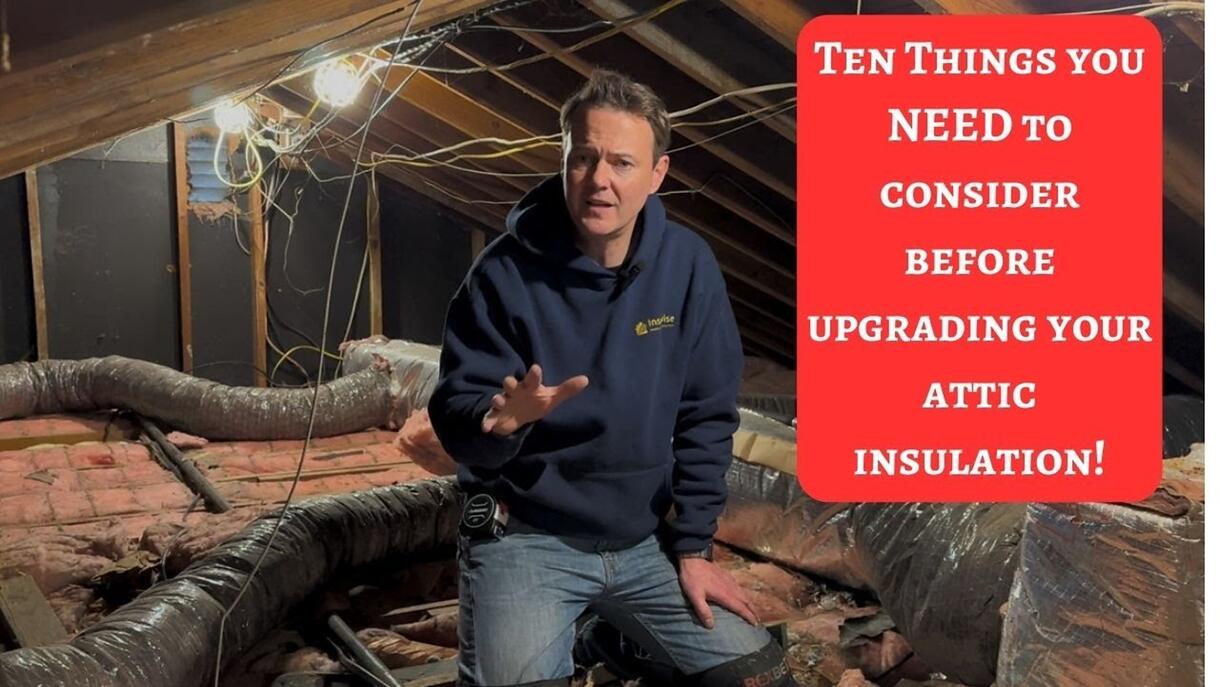
Video: Ten things to consider before upgrading your attic insulation, from Insulwise.
How an insulation replacement runs in Fort Worth
Seal the roofline, trap the attic empty, strip the old material, then blow the new.
-
Free inspection with depth and contamination noted
Whoever attends photographs the runs, wet patches and nests, measures the existing depth, and checks the vents, soffits and stacks for the openings. The written scope prices removal, cleaning and new insulation as separate lines.
-
Seal the roofline
Ridge and gable vents, soffit-fascia gaps, roof returns and plumbing stacks are closed in hardware cloth, sheet metal and packed copper mesh. New insulation waits until nothing can reach it.
-
Trap until quiet
Snap traps go on the runs and stay at least a week, and trapping continues until several consecutive checks come back empty.
-
Strip, clean and air-seal
Old material goes out through the hatch by vacuum hose, the floor is HEPA vacuumed and sanitized, stained wood is treated for odor, and ceiling penetrations are sealed while they are exposed.
-
Blow the new insulation and check the depth
Eave baffles go in, fresh fiberglass or cellulose is blown to the marked depth, and a follow-up visit confirms the seals are holding and the attic is quiet.
Ready to start? Call (817) 710-2756 or Book a Free Inspection.
Why Fort Worth homeowners book insulation replacement through us
New insulation holds its rating only if three things happened first, and each one is visible in the paperwork.
Blown in after the roofline is closed
Every insulation job we route is scheduled after the openings are sealed in metal and the traps have gone quiet, so the fresh material goes into an attic nothing can reach. The quote states the square footage, the share of the floor being cleared, the material and the depth, and it sits on its own line next to the cleanup and the sealing, so a second bid on the same scope can be compared number for number.
HomeGuide 2026: attic insulation removal and replacement $2.50 to $5.50 per sq ft nationally
The old material comes out for a reason you can check
Flattened runs and urine-soaked patches have already lost most of their value as insulation, which is why a rat-used attic costs money in August as well as in February. The contractor we route shows you the contamination in photographs and states how much of the floor is being cleared before quoting a strip, and a clean, dry attic that has only settled with age gets a top-up and keeps its material.
US Department of Energy: compressed insulation does not deliver its rated R-value, and wet insulation performs poorly
State-licensed rodent work under the new insulation
The sealing and trapping that the insulation depends on are regulated work in Texas, and every contractor we route for them holds a business license from the Texas Department of Agriculture's Structural Pest Control Service with a certified applicator on the job. You are encouraged to look the license up before anyone climbs the ladder and to ask for a certificate of insurance at the same time. A contractor who hesitates at either is one to pass on.
Texas Structural Pest Control Act, Occupations Code chapter 1951: TDA business license and certified applicator required
What Reddit Says About Attic Insulation Replacement in Fort Worth
The homeowner threads on attic insulation after rats come back to one piece of advice more than any other: get several bids for the same scope and make each one itemize the removal, the cleaning, the new insulation and the sealing as separate lines. People post quotes for jobs described the same way that range from under two thousand dollars to tens of thousands, and the recurring question underneath is whether they are being taken for a ride. A single bundled number, the threads agree, cannot be judged, and an inspection fee just to get a bid is a barrier that a free inspection removes.
The red flags people warn each other about are specific to this part of the job. A contractor who pushes a full strip without showing the contamination is one. A contractor who blows new material over rat-used insulation without mentioning it is another. Trapping with no sealing, described as harvesting rats in traps forever, and poison with no sealing, which leads to the dead-in-the-wall smell that fills its own threads, are the two that come up on every rodent thread regardless of the service. Long monitoring contracts folded into the removal price appear often, with monthly fees nobody explained at the sale.
The questions they tell each other to ask are direct: what exactly is included and what is a separate line item, will you clean up and decontaminate or only trap, is the exclusion warrantied and does it renew, how many follow-up visits are included, and what happens if they come back. Rodent mites persisting in nest material after the rats are gone is raised as a reason to strip the old material and refuse a top-up. Timelines are the other constant: two months is common, four months with no resolution appears, and people wish they had been told.
The free inspection is built to answer those questions in writing, with the attic photographed and every part of the job on its own line.
A common insulation call from an Alliance two-story
The situation: A common call comes from a 2000s two-story slab home in the Alliance area, on a street that backed onto pasture until the lots behind it were cleared. The scratching along the upstairs hallway ceiling started in the fall and the family put up with it through the winter. When the homeowner climbs the pull-down stair in the garage in March, the builder-grade blown fiberglass along both ridge vent runs is pressed flat into a pair of paths the length of the house, matted dark near the furnace platform, with droppings along the bottom of each run and an ammonia smell that gets worse every warm afternoon. The upstairs bedrooms have run hot for two summers and the bills have gone up, and until now nobody connected the two.
What gets done: The free inspection traces the entry to the ridge vent, which has no screen behind it, and to a roof-to-wall gap at the soffit over the garage. Both are closed in hardware cloth and sheet metal, the plumbing stacks get copper mesh, and traps go on the runs for a week until the checks come back empty. Then the insulation along both ridge runs and the matted area by the furnace comes out through the pull-down stair by vacuum hose, the exposed drywall and joists are HEPA vacuumed and sanitized, the stained platform gets an odor treatment, and the can lights and the bath fan penetrations are sealed while they are exposed. Eave baffles go in and fresh fiberglass is blown over the cleared areas and topped across the rest to a single marked depth.
How it turns out: The hallway is quiet, the smell is gone within days, and by the first hot week of summer the upstairs holds its temperature in a way it had not for two years. The homeowner has photographs of the attic before and after, depth rulers still standing on the joists, and a sealed roofline under the new material.
Insulation replacement questions from Fort Worth homeowners
The questions that come up most when the insulation has to come out, answered plainly.
Call (817) 710-2756Can you blow new insulation over the old stuff?
Over clean, dry insulation that has settled with age, yes. Over insulation rats have used, no. The compressed runs and the urine-soaked patches underneath keep smelling, keep carrying the scent trails that draw the next rat, and keep performing poorly for the reasons the Department of Energy gives about compressed and wet insulation. Burying them under fresh material hides the problem and leaves it. If a contractor proposes a top-up on an attic with visible runs and dark patches, ask for the photographs and a second bid. A top-up is the right answer for a clean attic and the wrong one for a contaminated one.
How much of the attic has to be cleared?
As much as is compressed, wet or nested in, and the free inspection photographs show where that line falls. A one-winter infestation on a single route between a ridge vent and a warm duct often means clearing a band along that route and topping up the rest. An attic used through two or three winters, or an older attic where the droppings sit in the bottom of several layers, means clearing to the drywall. The quote should state the share of the floor being cleared and why, so you can compare it against another contractor's read of the same photographs.
Why does the insulation have to wait for the trapping?
Fresh blown insulation is the best nest material a rat can find, and putting it into an attic that still has animals in it or an open vent is paying to furnish their next winter. The order is sealing first, trapping until the traps stay empty through several checks, then removal and re-blow. UF/IFAS advises leaving traps at least a week because roof rats avoid new objects, and HomeGuide puts a severe infestation at one to two months of trapping, so the insulation can be the last thing on the calendar by a month or more. Waiting is what makes it a one-time bill.
Will the new insulation lower my summer bills?
Insulation blown to proper depth over a sealed ceiling plane performs the way the flattened, soaked material could not, and in a Fort Worth attic that passes 130 degrees on a summer afternoon that difference shows up in the rooms below. The Department of Energy's point is that compressed insulation does not deliver its rated R-value, so a rat-used attic was under-insulated before the work began. Nobody attending will promise a dollar figure on the bill, because that depends on the house, the equipment and the weather. What can be said is that the attic goes from compromised to rated, and the sealing that comes first keeps it that way.