Attic Cleanup and Decontamination in Fort Worth, TX
Once the rats are out and the roofline is sealed, the attic still holds their droppings, nests and urine-soaked insulation. Cleanup removes all of it, HEPA vacuums the framing and sanitizes what stays, and it is done once because the sealing comes first.
- Sealed before cleanup, done once
- Cleanup priced on its own line
- Answered 24 hours a day
What attic cleanup and decontamination covers
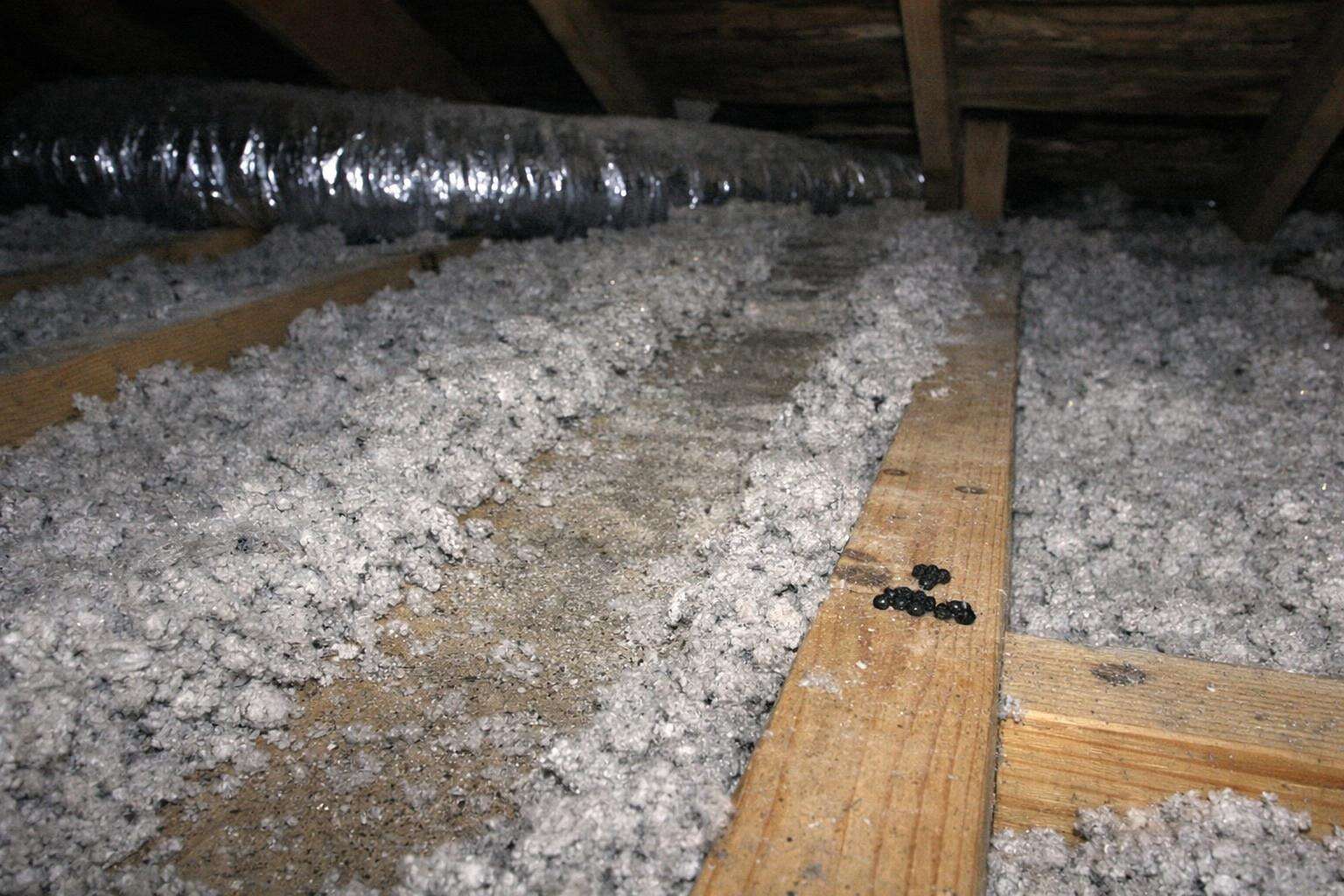
Attic cleanup covers the removal of everything the rats left behind and the treatment of everything they touched: droppings, nest pockets, food caches, soiled and flattened blown insulation, and the urine that has soaked into joists and decking. Trapping and sealing deal with the animals. This is the work that deals with the attic afterward.
The removal stage comes first. Contaminated blown insulation is drawn out through the hatch with an insulation vacuum and a hose run to a truck or the driveway, so nothing gets carried through the bedrooms in bags. Droppings on the joists, the top plates of the walls, the ductwork and the water heater platform are picked up by hand and by a HEPA-filtered vacuum, which traps the fine dust a household vacuum would blow back into the attic air. Nests are bagged. Then the exposed framing gets a sanitizing treatment, and an odor product goes on wood that urine has stained.
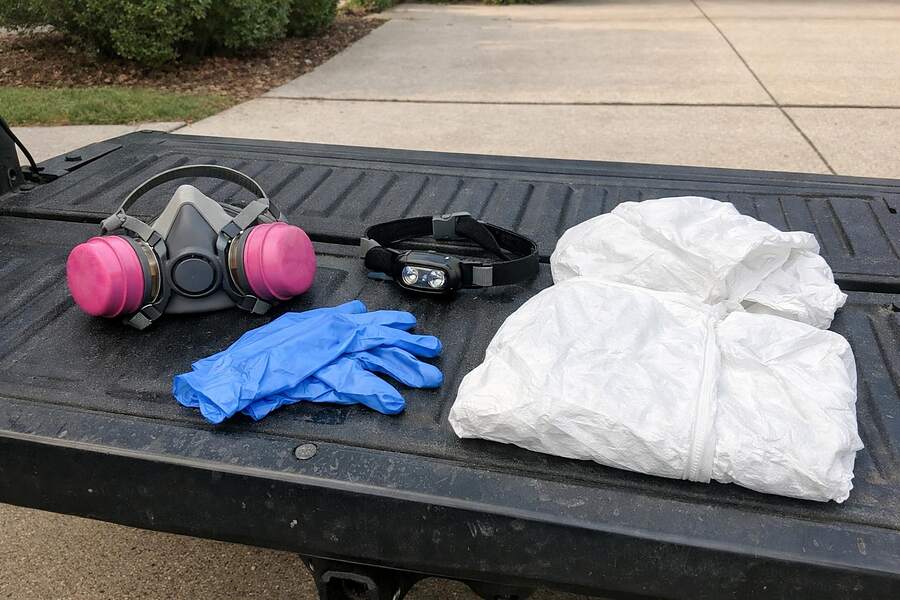
Whoever attends wears a half-face or full-face respirator and a disposable suit for the whole removal stage. That is standard practice for any droppings cleanup, on general contamination grounds: dried droppings turn to dust when disturbed, fiberglass goes airborne the moment it is moved, and the ammonia load in a wet attic is real. More on the health side below.
- Droppings removed from joists, wall plates, ducts and decking
- Contaminated blown insulation vacuumed out through the hatch
- Nests, caches and chewed debris bagged and hauled
- HEPA vacuuming of exposed surfaces
- Sanitizing treatment on framing and decking
- Odor treatment on urine-stained wood
- A written note of chewed wiring, ducts or damaged decking found during the work
Where a large share of the insulation comes out, the attic is left ready for insulation replacement, which is quoted as its own line so you can see both numbers.
Signs a Fort Worth attic needs decontamination
The sign that settles it is droppings in volume along the insulation surface, and in a Fort Worth attic those are almost always roof rat droppings, which UF/IFAS describes as a quarter to half an inch long, banana shaped, with pointed ends. A handful near the hatch means an animal passed through. Droppings layered under the surface of the insulation and heaped along a joist bay mean the attic was lived in, often for more than one winter.
Most of the other signs can be read from the hatch with a flashlight.
- Blown insulation flattened into runs and tunnels where the rats traveled the same route night after night
- An ammonia smell that gets sharper on hot afternoons, as urine in the insulation warms under the roof deck
- Greasy dark rub marks along rafters and the tops of walls
- Nest pockets of shredded insulation, paper or fabric, often against the water heater flue or a warm duct
- Pecan hulls, acorns or dog kibble carried up from the yard and cached under the insulation
- A musty smell from the supply vents when the air conditioning runs
The scratching overhead usually stops once the trapping is done, and that is when a lot of people climb up to look and find out what they were living under. It is common to feel the house has been taken over, and common to be told by friends that a few rats in the attic is no big deal. The attic photographs from the free inspection settle both: they show how far the contamination goes and what it will take to get the attic back.
Why the roofline is sealed before the attic is cleaned
Sealing comes before cleanup because a decontaminated attic with an open soffit gap is recontaminated by the next cold snap. The order the contractor we route works to is exclusion first, trapping until the attic has been quiet through several checks, then cleanup. Paying for decontamination twice is the most avoidable expense in the entire job, and the order is what avoids it.
Exclusion means the roofline is closed in materials a rat cannot chew, to the UF/IFAS rat-proofing standard: hardware cloth behind gable and ridge vents, sheet metal at soffit-fascia gaps and roof returns, copper mesh packed into plumbing stack and cable penetrations, a cap on the chimney. Trapping then removes the animals that were inside when the openings closed. UF/IFAS advises leaving traps down for at least a week, since roof rats are suspicious of anything new on their route, and a heavy infestation takes longer to trap out. When the traps have been empty through consecutive checks, the attic is ready for cleanup. The exclusion page covers the sealing work in detail.
There is a practical reason as well. Cleanup is noisy and disruptive, with a vacuum running for hours and someone moving across the joists. Doing it with animals still in the attic drives them into the wall voids, and in a Fort Worth summer that is where they already want to be. Doing it after the sealing and trapping means the attic is empty when the work begins and stays that way.
Full removal, targeted removal and fogging compared
Three levels of attic cleanup get quoted around Fort Worth, and the right one depends on how much of the blown insulation is contaminated and how long the rats were there.
Full removal
Full removal takes all the blown insulation out, cleans the framing and decking down to bare wood, sanitizes, treats odor, and leaves the attic ready for fresh insulation. It is the answer for a long infestation with droppings across the attic, urine wet through the insulation, and nests built into it. It costs the most and it is the only option that resets the attic.
Targeted removal
Targeted removal takes out the insulation along the runs, nests and wet patches and leaves the clean remainder in place, then sanitizes the whole attic surface. It fits a short infestation caught within a season, where the rats used one route between a vent and a warm duct. A contractor who quotes targeted removal should show you in the attic photographs where the contamination stops.
Fogging alone
Fogging sprays a sanitizing product across the insulation surface and removes nothing. It has a place as the last step after removal. On its own, for an attic with visible droppings and flattened runs, it leaves the droppings and the wet insulation in place under a treated skin. A quote made up of fogging and nothing else for that kind of attic deserves a second bid.
| Approach | What comes out | Fits when |
|---|---|---|
| Full removal | All insulation, droppings and nests, then sanitize and deodorize | Multi-season infestation, widespread droppings, wet insulation |
| Targeted removal | Runs, nests and wet patches only, then sanitize | One-season infestation confined to a route |
| Fogging alone | Nothing; treats the surface in place | Final step after removal, or very light contamination |
Can I clean the attic myself?
A careful homeowner can handle light contamination near the hatch, and a full attic is a different job. Light means a few dozen droppings on a small area of dry insulation. For that, the equipment is a particulate respirator, gloves, a disposable suit, a spray bottle of disinfectant to wet the droppings before they are lifted, and bags. Wetting first is the whole trick, because it keeps the dust down. Never sweep or use a household vacuum, which blows fine particles straight back out.
What is in the droppings
The CDC says rodents carry many diseases, passed to people directly through contact with their urine, droppings and saliva or through a bite, and indirectly through fleas, ticks and mites that fed on an infected animal. That is the CDC's position, and it is why nobody should sweep an attic dry or handle soiled insulation bare-handed.
Hantavirus deserves a plain sentence because it gets used to scare people. Most hantavirus cases in the United States occur in the western states, and the respirator worn during an attic cleanup is standard practice for any droppings job on general contamination grounds. It is there for the dust of dried droppings, for the fiberglass, and for the ammonia. Anyone selling attic cleanup in Fort Worth on a hantavirus scare is selling the wrong reason. The ordinary reasons are enough.
Those ordinary reasons are these. Dried droppings powder when insulation is moved. Urine-soaked insulation carries bacteria and a heavy ammonia load that a hot attic pushes into the house through gaps around can lights and the hatch. Mites and fleas that lived on the rats stay in the nest material after the rats are trapped out, and stripping the nests removes their habitat. And rodents follow scent: an attic that still smells of rat urine reads as home to the next rat that finds a gap, which is one more reason the odor treatment is part of the job.
Where the job outgrows a homeowner
Beyond that, the job outgrows a homeowner fast. Removing a soiled attic of blown insulation needs an insulation vacuum, a hose run down to the driveway, disposal of the bagged material, and hours of work on the joists under a roof deck that reaches 130 degrees and more on a Fort Worth summer afternoon. The bigger risk of doing it yourself is the order of operations: cleaning before the roofline is sealed and the trapping is finished means cleaning again. The free inspection shows you the attic in photographs, and the decision about who does the cleanup gets made with those in front of you.
How long does attic cleanup take?
The cleanup itself takes one working day in a typical Fort Worth single-story house, and the whole job from first visit to finished attic runs two to five weeks because the cleanup waits for the trapping to finish. HomeGuide puts trapping a small number of animals at two to three days and a severe infestation at one to two months, and the cleanup is scheduled once the traps have stopped catching.
The cleanup day depends on attic size, how much insulation is coming out, hatch access and the weather. A crew doing a full removal on a 1,500 square foot attic usually finishes in a day. A two-story house with 2,500 square feet of attic and a scuttle hole in a closet ceiling can run into a second morning. From May to September the attic is the limiting factor: work starts at first light and stops when the roof deck gets too hot to stay under, so a big summer job gets split across two early mornings. Whoever attends should tell you at the inspection how many visits the plan needs.
What attic cleanup and decontamination costs in Fort Worth
Attic cleanup and decontamination runs $600 to $2,500 as a national band in HomeGuide's 2026 figures, with most jobs landing between $600 and $1,000 and a severe attic reaching $4,000. No Fort Worth-specific cost survey exists, so these are national typical-job bands, and the free inspection produces the number for your attic with cleanup, insulation and sealing each priced on its own line.
| Item | Typical band | Source |
|---|---|---|
| Attic cleanup and decontamination | $600 to $2,500 (typical $600 to $1,000; severe to $4,000) | National, HomeGuide 2026 |
| Attic insulation removal and replacement | $2.50 to $5.50 per sq ft | National, HomeGuide 2026 |
| Dead rodent removal, if needed | $150 to $500 | National, HomeGuide 2026 |
| Full restoration (insulation, ducts, decking, wiring) | $3,000 to $10,000 and up | National, HomeGuide 2026 |
What moves a cleanup quote within the band is mostly volume and access.
- Attic square footage, which sets the labor hours and the volume of material to remove
- Share of the insulation that is contaminated, which decides targeted against full removal
- Access: a scuttle hole in a closet ceiling against a garage pull-down stair
- Depth of the blown insulation, since older attics with layers added over the decades hold more material
- Chewed ductwork, wiring or decking that needs a separate trade
- Disposal volume, because soiled insulation is bagged and hauled the same day
Fort Worth attics: blown insulation, summer heat and no basement
A Fort Worth house has no basement, so the attic is where the rats were and the attic is where the cleanup happens. The typical roof is composition shingle over a ventilated attic with blown insulation, and blown insulation is the material rats like best: it tunnels, it holds a nest, and it soaks up urine. That combination is why cleanup here is almost always an insulation job as well as a droppings job, and why the two are quoted together with separate lines.
The heat shapes the schedule. From late spring through September the attic under a Fort Worth roof reaches 130 degrees and more by early afternoon, which limits how long anyone in a respirator and suit can stay up there. Summer cleanups run at first light. The same heat drives the rats down into wall voids and garages in July and August, which is why a summer job can find the attic empty and the walls busy, and why the trapping plan covers both before the cleanup is scheduled.
The calls that turn into the largest cleanups come from two kinds of house. In Fairmount, Ryan Place, Crestwood and Arlington Heights, pre-1949 pier-and-beam bungalows and Tudors sit under a live-oak canopy that touches the roof, and their attics carry layers of insulation added over decades, aged decking and old plumbing penetrations; the droppings are in the bottom layer, and the contamination is often two or three winters deep by the time it is found. In the slab-on-grade tract housing of Alliance, the far north and the Chisholm Trail corridor, the entry is a ridge vent or a builder-grade soffit gap and the infestation is usually newer, so targeted removal fits more often. In both, rodent calls ramp in fall and peak in January and February, so an attic cleaned in spring should have been sealed before October.
What to check on the contractor before the attic is touched
Start with the state license. The Texas Structural Pest Control Act requires a business license from the Texas Department of Agriculture's Structural Pest Control Service and a certified applicator, and rats and mice fall under the Pest Control category. Every contractor we route holds a TDA structural pest control business license. Confirm it yourself through the TDA current-license lookup before work starts, and ask for a certificate of insurance at the same time. The TDA also publishes a homeowner guide, Use a Licensed Applicator to Control Rodents in Your Home, which is worth reading before you sign anything.
Then read the quote. It should list trapping, exclusion, cleanup and any insulation replacement as separate lines with the attic square footage written down, so a second bid on the same scope can be compared line by line. Ask whether the cleanup price includes disposal, whether it covers sanitizing and odor treatment or removal only, and what happens if chewed wiring or ductwork turns up under the insulation. Ask about the warranty on the exclusion work that precedes the cleanup: how long it runs, whether it renews, and how many follow-up visits it includes if something gets back in. Ask for photographs of the attic before and after, and for the respirator and suit to be worn as a matter of course. The about page explains how the connection works, and the contact page has the phone line and the form.
Services that usually go with this one
A Fort Worth job tends to run as a sequence, and these pages describe the steps on either side of this one.
- Attic Insulation Replacement: Flattened or fouled blown insulation removed and fresh fill installed to depth.
- Rodent Exclusion: Soffit returns, gable and ridge vents, plumbing stacks, weep holes and skirting closed in steel mesh and sheet metal.
- Dead Rodent Removal: Finding the carcass behind the smell, taking it out and closing the route it used.
The about page explains how the parts fit together, and the phone is answered at any hour.
Disinfecting after an infestation
Three steps that come after the animals are out.
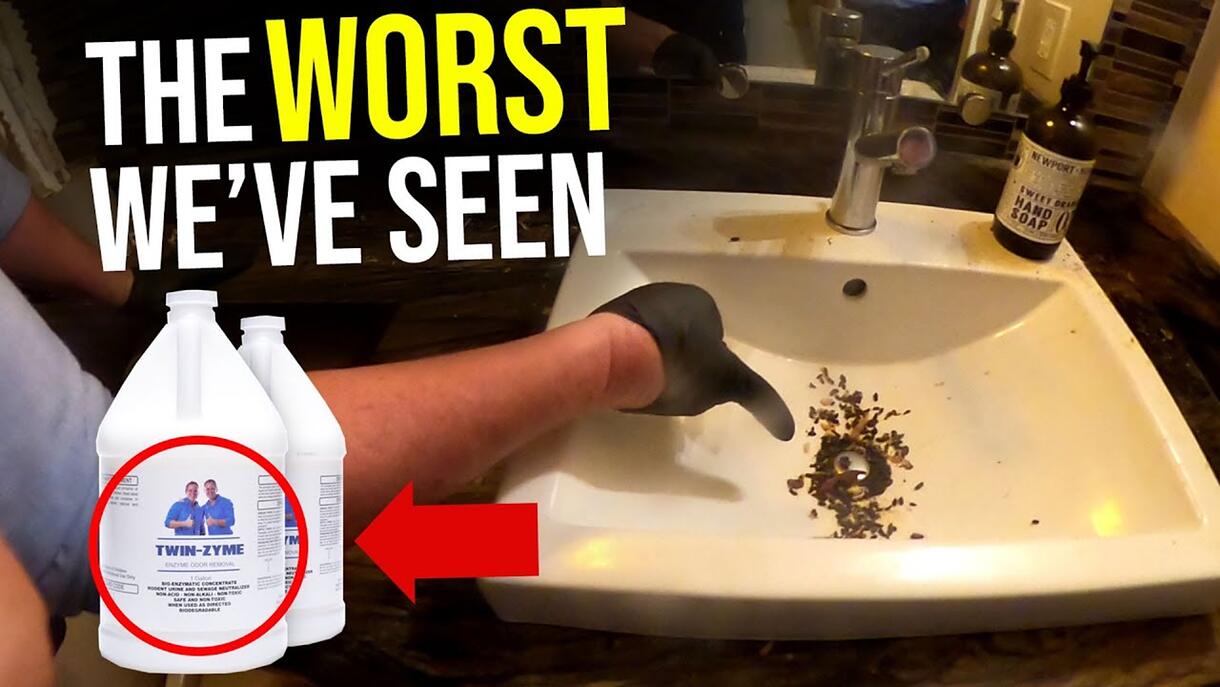
Video: 3 things to do to disinfect after a rodent infestation, from Twin Home Experts.
How an attic cleanup runs in Fort Worth
The order is fixed: seal the roofline, trap the attic empty, then clean it once.
-
Free inspection and attic photographs
Whoever attends walks the attic with a light, photographs the droppings, runs, nests and wet patches, and checks the soffits, vents, stacks and chimney for the openings. You get a written scope with cleanup on its own line.
-
Seal the roofline
Soffit-fascia gaps, gable and ridge vents, roof returns and plumbing stacks are closed in hardware cloth, sheet metal and packed copper mesh to the quarter-inch standard. Nothing gets cleaned until nothing can get back in.
-
Trap until the attic is quiet
Snap traps go on the runs and stay at least a week. Trapping continues until several consecutive checks come back empty, and in summer the wall voids and garage get traps as well.
-
Remove, HEPA vacuum, sanitize, deodorize
Soiled insulation goes out through the hatch by vacuum hose, droppings and nests are removed, framing is HEPA vacuumed and sanitized, and urine-stained wood gets an odor treatment. In summer this is a first-light job.
-
Insulation and a follow-up check
Fresh insulation is blown in if the old material came out, and a follow-up visit confirms the traps are still empty and the seals are holding.
Ready to start? Call (817) 710-2756 or Book a Free Inspection.
Why Fort Worth homeowners book attic cleanup through us
Cleaning an attic once instead of twice comes down to three decisions made before the vacuum goes up the ladder.
Cleaned once, because the sealing comes first
Every cleanup we route is scheduled after the roofline is closed in metal and the traps have gone quiet, so the attic is decontaminated one time and stays that way. The quote separates trapping, sealing and cleanup with the square footage written on it, which lets you compare it against another bid on the same scope and decide whether to do the insulation now or later. Most cleanups fall in the lower half of the national band, and the free inspection tells you where yours sits.
HomeGuide 2026: attic cleanup and decontamination $600 to $2,500 nationally, most jobs $600 to $1,000
The health reasons given are the real ones
The respirator and suit are for droppings dust, fiberglass and ammonia, which is standard practice for any droppings cleanup anywhere. Most US hantavirus cases are western, and nobody attending your attic will sell you the work on that scare. The reasons to do it are ordinary and sufficient: dust from dried droppings, bacteria in wet insulation, mites left in the nest material, and scent trails that invite the next rat through the next gap.
CDC: rodent diseases spread directly through urine, droppings, saliva and bites, and indirectly through fleas, ticks and mites
A TDA-licensed contractor in the attic
Rodent work for hire in Texas needs a business license from the Texas Department of Agriculture's Structural Pest Control Service and a certified applicator, and every contractor we route holds one. You are encouraged to look the license up before anyone goes into the attic and to ask for proof of insurance at the same time. The state's own homeowner guide says the same thing, and a contractor who hesitates at either request is one to pass on.
TDA homeowner guide: Use a Licensed Applicator to Control Rodents in Your Home
What Reddit Says About Attic Cleanup in Fort Worth
The advice repeated most often in the homeowner threads about attic work is to get more than one bid on the same scope and to refuse any quote that is a single bundled number. People post prices for jobs described almost identically that run from under two thousand dollars to thirty thousand, and the question under nearly every one of them is whether they are being taken advantage of. The threads settle on the same answer: cleanup, insulation, trapping and sealing have to be separate lines before anyone can judge the price, and an inspection fee just to get a bid is a real barrier that makes a free one worth having.
The red flags are consistent. A plan built on poison and no sealing comes first, because the dead-in-the-wall smell that follows is one of the most common secondary complaints in the corpus and the line about poison making rats go outside to die is treated as a tell for a dishonest operator. The second is trapping with nothing sealed, which one commenter compared to farming rats. On the cleanup side, people distrust companies that push a full insulation strip without showing the contamination, and distrust just as much the companies that trap, seal and leave the attic as they found it. Long monitoring contracts folded into a removal price come up often, with monthly fees that were never explained at the sale.
The questions people tell each other to ask are direct. What exactly is included and what is a separate line item. Will you clean up and decontaminate, or only trap. How many follow-up visits are included. What happens if they come back. Several threads raise rodent mites persisting in nest material after the rats are gone, which is one reason the cleanup matters to people beyond the smell. Timelines are the other theme: two months is common, four months with no resolution appears, and nobody was warned.
The free inspection is built to answer those questions before any money changes hands, with the attic photographed and each part of the job priced on its own line.
A common attic cleanup call from a Crestwood house
The situation: A common call comes from a 1940s house in Crestwood, a few streets from the Trinity River trails, where the scratching over the back bedroom had gone on for the better part of two winters before anyone looked. A trapping company had caught a handful of rats the previous year and the noise had stopped for a while. When the homeowner finally pushes up the hatch, the flashlight shows the blown insulation flattened into runs from the gable vent to the water heater flue, droppings heaped along two joist bays, and an ammonia smell strong enough to close the hatch again. Sleep has been bad for months, and a relative has already said it is only a couple of rats.
What gets done: The free inspection finds the earlier company sealed nothing. The gable vent screen and a gap where the old cast-iron stack meets the decking are closed in hardware cloth and copper mesh, the roofline is checked from a ladder, and traps go back on the runs for a week to confirm the attic is empty. Then the cleanup: the insulation along the runs and the two wet bays comes out through the hatch by vacuum hose over one early morning, the nests behind the flue are bagged, the joists and the top of the ductwork are HEPA vacuumed, the framing is sanitized and the stained decking gets an odor treatment. A cable run with chewed sheathing is photographed and written up for an electrician.
How it turns out: The smell is gone within days and the attic is ready for fresh insulation the following week. The homeowner has photographs of the attic before and after, a sealed roofline, a written note for the electrician, and a quiet ceiling to sleep under.
Attic cleanup questions from Fort Worth homeowners
The questions that come up most on cleanup calls, answered plainly.
Call (817) 710-2756Is it safe to be in the house while the attic is being cleaned?
Yes, with the hatch area sealed off and the material leaving by hose through the hatch so it never passes through the rooms. The contractor covers the floor under the hatch, runs the vacuum hose to the driveway, and keeps the household away from the hatch while insulation is moving. The sanitizing and odor products used on framing are applied in the attic and the house is ventilated afterward. Anyone with a respiratory condition should stay out of the rooms directly under the hatch for the working day, and the contractor should say so at the inspection, well before the morning of the work.
Why is the smell worse in the afternoon than the morning?
The smell is urine in the insulation warming up. A Fort Worth attic climbs past 130 degrees under the roof deck on a summer afternoon, and the heat drives ammonia out of soiled insulation and down through the gaps around can lights, the hatch and the bath fan. In the morning the attic is cool and the smell fades. That afternoon pattern is one of the clearest signs that the contamination is in the insulation and that removal, followed by an odor treatment on the wood, is what fixes it. Fogging over the top does not.
Do I have to replace the insulation, or can it be cleaned?
Dry, clean insulation stays, and insulation that is wet, nested in or flattened into runs comes out. The Department of Energy notes that compressed insulation no longer delivers the R-value it was rated for and that wet insulation performs poorly, so the flattened runs and urine-soaked patches have lost most of their value anyway. Whoever attends shows you in the photographs where the contamination stops. A short infestation on one route often means targeted removal and the rest stays. Two or three winters of use usually means the attic is stripped and re-blown, and that replacement is quoted on its own line.
What if there is a dead rat in the attic or a wall?
A dead animal found during cleanup is removed as part of the work, and one in a wall void is a separate visit priced on its own. The smell of a dead rat in a wall is the common aftermath of a poison-only plan, and it usually shows up a week or two after the bait went down. The contractor locates it by smell and by drilling a small inspection hole, removes it, treats the cavity and patches the opening. The dead rodent removal page covers that visit. HomeGuide's 2026 national band for it is $150 to $500.
Will the attic get reinfested after the cleanup?
A return after cleanup means an opening was missed or a seal has failed, and the exclusion warranty is what covers it. Ask before work starts how long the warranty runs, whether it renews, and how many follow-up visits it includes. A sealed attic that has been stripped, sanitized and deodorized is far less inviting to the next rat than one still carrying scent trails, which is part of why the odor treatment is done. If activity comes back, the follow-up visit finds the gap and closes it; the cleanup does not need repeating unless there is fresh contamination.