Commercial Rodent Control in Fort Worth, TX
Restaurant kitchens, distribution buildings in the Alliance corridor, apartment communities, retail strips and offices get a per-site quote built on sealing the building, trapping what is inside, and a written record a health inspector or a landlord can read. The site inspection is free.
- Per-site quote, every line itemized
- Docks and roof units sealed
- Written record for inspections
What commercial rodent control in Fort Worth includes
Commercial rodent control on a Fort Worth site includes a free inspection that maps the building, sealing of every opening found at the docks, doors, roof and penetrations, trapping inside the building, licensed exterior stations where the site needs them, and a documentation package for the manager's file. Any ongoing monitoring is quoted on its own line with a per-visit price and an end date.
The site map
Whoever attends walks the roof, every door, the dumpster enclosure, the ground perimeter and the interior, and marks each opening and each proposed trap or station on a plan of the building. The map is the basis of the quote and of every later visit log.
Sealing
Every opening is closed with a material a rat cannot chew: hardware cloth, sheet metal, mortar, and new bottom seals and brush seals on doors. The rodent exclusion page describes the materials, and the loading-dock section below describes where they go on a commercial building.
Trapping and exterior stations
Snap traps go on the runs inside, above the ceiling grid, behind the line, along the racking, and stay at least a week. Where the site needs an exterior perimeter, a certified applicator places numbered tamper-resistant stations and logs each one.
Documentation
The manager receives the site map, a log of each visit and a summary with the contractor's TDA license number. A formal clearance letter is available when a landlord, a buyer or a board needs a signed finding on one date.
Kitchens, Alliance warehouses, apartment communities, retail strips and offices
Each building type in Fort Worth has its own rodent pattern, and the site map follows the pattern.
Restaurants and commercial kitchens
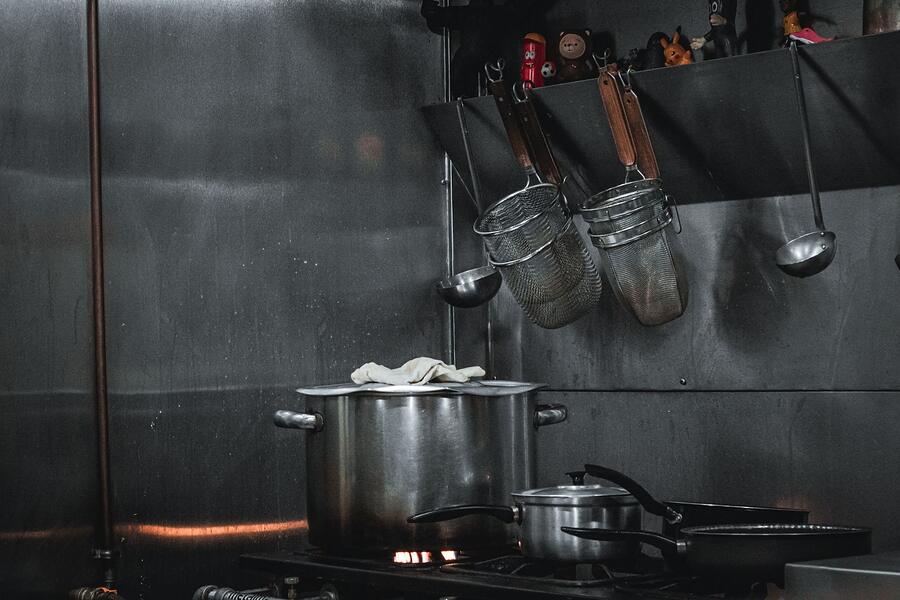
A kitchen supplies food, water and warmth, and its openings are at the back: the gap under the rear door, the grease-trap and floor-drain penetrations through the back wall, the hood chase to the roof, and the dumpster enclosure a short walk away. Roof rats come down the hood chase from the roof; Norway rats come in at floor level from the enclosure. Work runs after close, and the quote says so.
Warehouses and distribution buildings
The Alliance corridor in far north Fort Worth is built of tilt-wall distribution boxes with rows of dock doors, and a rodent problem in one is a door problem before it is anything else. Worn bottom seals, brush seals with open corners, the pit under a dock leveler, a man door propped for airflow, and conduit and pipe penetrations through the tilt panels are the openings. Inside, racking hides the runs and long aisles hide the traps, so the map numbers every door and every station.
Apartment communities and multifamily
A community with shared attics, common plumbing chases and a dozen units that each hear the same rat needs a report that names the opening and its building, because that is what decides whose bill it is. Fort Worth apartment stock ranges from garden buildings with ventilated attics and builder-grade soffits to older brick buildings with weep holes and open chimneys, and the map covers the roofline of every building on the site.
Retail strips and offices
A strip center shares a roof void across every tenant, so a bakery's rat is the nail salon's rat. The map covers the roof units, the parapet, the rear doors of every suite and the shared enclosure. Offices see the same roof-unit and conduit entries with fewer attractants, and an office in an older building near the Trinity River corridor gets a ground-level plan for Norway rat burrows along the slab.
Exclusion at loading docks, roll-up doors, dumpster enclosures and roof units
Exclusion on a Fort Worth commercial building means closing every opening a rat can pass at the docks, the doors, the dumpster enclosure, the roof units and the conduit penetrations, with materials a rat cannot chew. UF/IFAS publishes a quarter inch as the rat-proofing standard, and every opening on the map is measured against it.
Loading docks and dock levelers
Dock doors get a bottom seal with no daylight and side seals with closed corners. The dock leveler pit is checked for gaps at the hinge and the lip, and the space between the leveler and the pit wall is screened. A dock bumper pulled away from the wall leaves a channel behind it, and that channel gets mortar.
Roll-up doors and man doors
A roll-up door leaks at the bottom rail, at the guide tracks and at the corners where the curtain meets the jamb, and each gets a seal or a metal closure. A man door that staff prop open gets a self-closer and a conversation with the manager, because no seal survives an open door.
Dumpster enclosures
The enclosure is walked for Norway rat burrows along its slab and behind the gates, and the burrows are filled after trapping. Grease and food waste on the slab are the manager's side of the job, and the report says so.
Roof units and conduit penetrations
Rooftop HVAC curbs, exhaust hood chases, pipe boots, parapet scuppers and the points where conduit and refrigerant lines pass through a wall or a tilt panel are the roof-level openings, and a roof rat reaches the roof along a tree, a fence or a service line. Each penetration is collared in sheet metal or packed with hardware cloth and mortar. Foam alone is refused, because a foamed conduit hole is a return visit waiting to happen.
Trapping compared with rodenticide on a commercial site
Traps are the indoor method and bait, where the site needs it, belongs in numbered tamper-resistant stations outside. The EPA states that most rodenticides are anticoagulants and that death comes four days to two weeks after feeding begins, so a rat that feeds at a station and nests above a dining room ceiling dies above the dining room. Trapping indoors, as UF/IFAS points out, lowers the odds of a baited rat dying somewhere inside the structure. A certified applicator under a TDA business license is the only person who may place the exterior stations, and the log records each one.
Records for the health inspector, the landlord and the board
A commercial rodent record has three parts: the site map with every sealed opening and every station numbered, a log of each visit with what was found and what was done, and a summary a manager can hand across a counter. Every page carries the contractor's TDA structural pest control license number.
The log is what an inspector reads. Each entry states the date, who attended, which stations and traps were checked, what each held, what was replaced or re-sealed, and what the manager was asked to fix on the building side, such as a propped door or a greasy enclosure slab. Over a few months it shows whether activity is falling, which is the question a health inspector, a landlord or an HOA board asks.
The health dimension is why the record exists. The CDC describes two paths by which the many diseases rodents carry reach people: direct contact with urine, droppings, saliva or a bite, and indirect contact through fleas, ticks and mites that fed on the animal. On a prep line, that contact happens on a surface food touches. A dated log of sealing and trapping is a stronger answer to a finding than a verbal account of a visit.
A landlord or a tenant who needs a finding on one date, for a lease turnover, a sale or a dispute over which suite the rats came from, can ask for a signed clearance letter on top of the log. The rodent inspection page describes the visit that produces both.
What should a commercial rodent contract include?
A commercial rodent contract should include the initial job as its own priced scope, with inspection, sealing, trapping, exterior stations and documentation on separate lines, and any monitoring as a second scope with a per-visit price, a visit count, a statement of what a visit covers, and an end date. A contract that folds all of that into one monthly number is the contract the customer threads warn about.
- Initial job. The site map, the sealing with materials named, the number of traps and the number of checks in the first program, the number and placement of exterior stations, and the documentation package.
- Monitoring, if any. The per-visit price, how many visits a year the total assumes, whether a visit is a station check only or a walk of the envelope with re-sealing where needed, and the date the contract ends.
- Warranty on the sealing. What it covers, how long it runs, whether it renews, and what a callback costs. Ask for the terms in writing and read them before comparing bids.
- Hours and access. After-close attendance for a kitchen, dock hours for a warehouse, and who holds the keys.
- Cancellation. Notice required and any charge for ending the monitoring scope early.
- License. The TDA business license number and the name of the certified applicator on the account.
Monitoring earns its place on a site with harborage nobody controls, such as a strip center with a shared roof void or a warehouse beside open pasture on the Alliance edge. On a building that has been sealed and re-checked, it is optional, and the quote should say which case the site is.
Is a monthly pest contract worth it for a restaurant?
A monthly contract is worth it for a restaurant when the building has been sealed first and the contract buys checked stations, an envelope walk and a current log; it is a poor buy when it replaces sealing, because then it is a monthly fee for harvesting rats that keep arriving through the same back door.
The customer threads on this trade describe the second case often: a monthly charge with an add-on stacked on it, months of visits, and no change in what the closing crew finds. The reason is structural. Bait and traps remove animals; they do nothing about the gap under the rear door or the open grease-trap conduit, so the population is replaced from outside as fast as it is reduced inside.
The way to make the monthly line worth paying is to buy the sealing first, on its own line, and then decide whether the site still needs a standing service. A kitchen in a free-standing building with three sealed openings and a filled burrow at the enclosure may need nothing more than a quarterly walk. A kitchen in a strip center whose roof void connects six suites has harborage it cannot close alone, and there a monitoring line with a stated scope and an end date is a sensible product.
What commercial rodent control costs in Fort Worth
Commercial rodent work in Fort Worth is quoted per site after the free inspection, and the residential bands below are the floor: a commercial site starts where a house ends and rises with square footage, door count, roof penetrations, station count, after-hours access and the documentation package. No Fort Worth-specific cost survey exists, so the bands are HomeGuide's national figures for 2026.
| Line item | National residential band (HomeGuide 2026) | What moves a commercial quote above it |
|---|---|---|
| Site inspection | $0 to $175 (free here) | Charged elsewhere as a first visit |
| Trapping and removal | $250 to $1,200 | Trap count across a kitchen, racking or a roof void; number of checks |
| Exclusion sealing | $500 to $2,500 | Dock doors, roll-up doors, roof units, conduit penetrations, enclosure burrows |
| Dead rodent removal | $150 to $500 | Ceiling grid or wall cavity over a dining room |
| Cleanup and decontamination | $600 to $2,500 | Contaminated stock rooms, ceiling voids, insulation |
| Monitoring program | Quoted per visit, own line, stated end date | Visit frequency and what a visit covers |
A restaurant of a few thousand square feet with a rear door, a grease-trap conduit and a hood chase to seal sits near the top of the residential exclusion band. A distribution building with a dozen dock doors and a leveler pit at each is a different quote, and the inspection is what produces it. Every line, including the monitoring line, arrives separately so the manager can accept some and decline others.
Fort Worth commercial buildings, from West 7th to the Alliance corridor
Fort Worth commercial rodent pressure splits by species and by district: roof rats on any building with a tree, a wire or a hood chase to the roof, and Norway rats at ground level around enclosures, slab edges and the creeks of the Trinity River corridor. There are no basements in the city, so the rats are in the ceiling void, the wall, the roof unit or the ground outside.
The older districts carry the roof rat load. Restaurants and offices in the West 7th district, the Cultural District, the Near Southside and the strips along the historic neighborhoods sit under a mature live-oak canopy, and a roof rat walks a limb onto a parapet the same way it walks one onto a bungalow in Arlington Heights. The far north has the opposite profile. The Alliance corridor is post-1990 tilt-wall and slab, with dock rows, conduit penetrations and open pasture at the fence line that sends displaced animals toward the loading docks each time the next parcel is cleared; the Alliance page covers the residential side of the same pressure.
The calendar is the same one houses run on. Calls ramp in the fall and peak in January and February as animals move into ceiling voids and attics for warmth, so a commercial envelope should be sealed before October. Mild winters keep roof rats breeding most of the year, and summer heat above 130 degrees in an unconditioned roof void pushes them down into walls and stock rooms, which is when a kitchen finds droppings under the line in July.
Licensing is where commercial work is least negotiable. The Texas Structural Pest Control Act, Occupations Code chapter 1951, requires a business license from the Texas Department of Agriculture's Structural Pest Control Service and a certified applicator, with rats and mice under the Pest Control category; the exterior bait stations most commercial perimeters use fall squarely inside it. Every contractor we route holds that TDA business license, and a manager should confirm the number through the TDA current-license lookup before work starts and keep it in the pest file for the inspector.
What to check on the contractor before a commercial contract is signed
Six checks separate a commercial program that ends the problem from one that bills for it: a current TDA license, a quote in separate scopes, named sealing materials, warranty terms in writing, a stated visit count, and a sample of the log the inspector will see.
- Look the business up in the TDA Structural Pest Control Service current-license lookup and ask for the name of the certified applicator who will attend.
- Ask for the initial job and any monitoring as separate scopes, with the monitoring line carrying a per-visit price, a visit count and an end date.
- Ask what closes each opening on the map. Hardware cloth, sheet metal, mortar and new door seals are answers; foam alone is a warning.
- Ask what warranty the contractor offers on the sealing, how long it runs, whether it renews and what a callback costs, and get it on the quote.
- Ask how many checks the first trapping program includes and what a visit beyond that costs.
- Ask for a sample visit log and site map before signing, so the format the inspector sees is the format the contractor has agreed to produce.
How a routed job is arranged is described on the about page, and the contact page takes the booking for a site walk, and the line is staffed at every hour.
Services that usually go with this one
A Fort Worth job tends to run as a sequence, and these pages describe the steps on either side of this one.
- Rodent Exclusion: Soffit returns, gable and ridge vents, plumbing stacks, weep holes and skirting closed in steel mesh and sheet metal.
- Rodent Inspection: A free walk of the roofline, attic, crawl space and yard that ends in a written report with each line priced on its own.
- Rodent Clearance Letters: A written inspection report for a closing, a lease, an HOA dispute or an insurance claim.
The about page explains how the parts fit together, and the phone is answered at any hour.
Pest control in a food premises
The standard a commercial kitchen is held to.
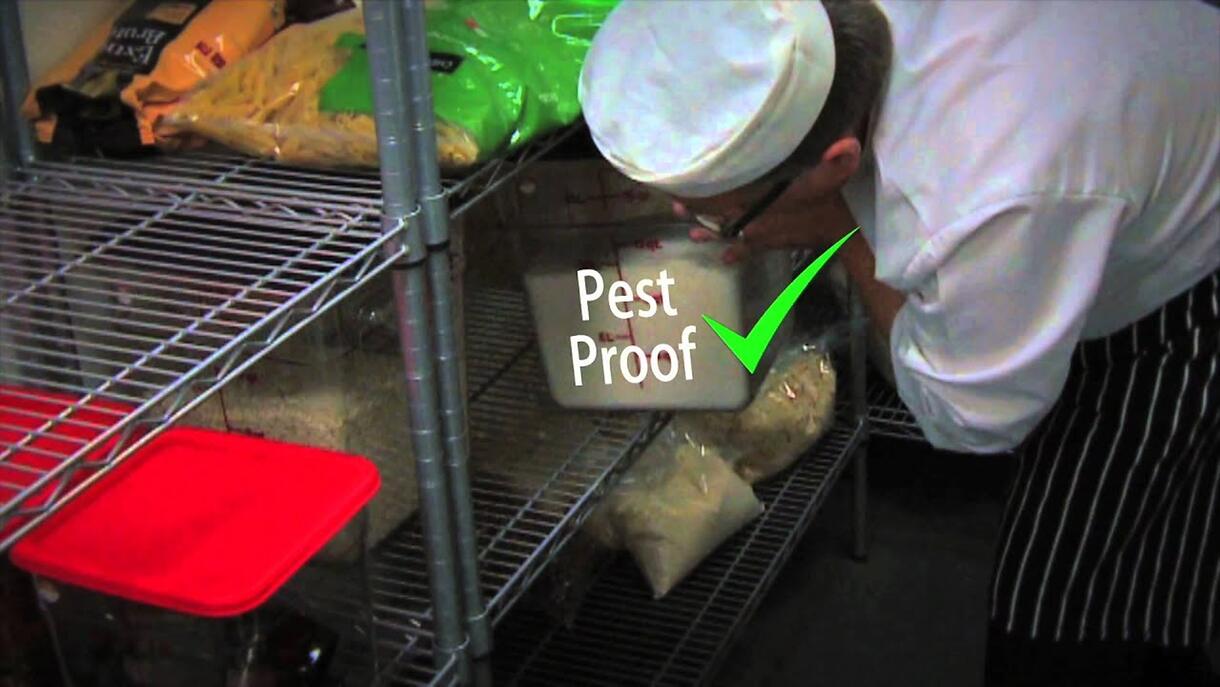
Video: Food safety coaching: pest control, from Food Standards Agency.
How a commercial rodent job runs in Fort Worth
Sealing the building envelope is the spine of the job, with trapping alongside it and the documentation and visit count scaled to the site.
-
Free site inspection and map
Whoever attends walks the roof, every dock and door, the dumpster enclosure, the perimeter and the interior, and marks each opening and each proposed trap or station on a plan. The per-site quote comes from this visit.
-
Seal the envelope
Dock and roll-up door seals are replaced, leveler pits screened, roof units and conduit penetrations collared in metal, and enclosure burrows marked for filling after trapping.
-
Trap inside, stations outside
Snap traps go on the runs the same visit and stay at least a week with a stated number of checks. Where the site needs a perimeter, a certified applicator places numbered tamper-resistant stations.
-
Re-check and fill burrows
Every sealed point is checked for fresh gnawing, traps are cleared or reset, and ground burrows are filled once activity stops.
-
Hand over the record
The manager receives the site map, the visit log and a summary with the license number. Monitoring, if the site needs it, is quoted on its own line with an end date.
Ready to start? Call (817) 710-2756 or Book a Free Inspection.
Why Fort Worth managers route commercial rodent work here
A health inspector, a landlord and an insurer each want something different, and these three points cover all three.
A license number the inspector can look up
Rat and mouse work in Texas, including every exterior bait station on a commercial perimeter, requires a TDA structural pest control business license and a certified applicator under Occupations Code chapter 1951. Every contractor we route holds that license, the number goes on every page of the site record, and a manager can confirm it in the TDA current-license lookup before the first visit and keep the printout in the pest file.
Texas Department of Agriculture current-license lookup, Structural Pest Control Service
Sealing quoted as its own scope
HomeGuide's 2026 national band for full-home exclusion runs from $500 to $2,500, and a commercial envelope with dock doors, roof units and conduit penetrations starts there and is quoted per site. Whatever the figure, it arrives on its own line, apart from trapping, stations, documentation and any monitoring, so a manager can compare the sealing scope against a second bid door by door and can decline the standing service once the building is closed.
HomeGuide 2026: full-home exclusion $500 to $2,500 nationally, the floor for a per-site commercial quote
A record built for a health finding
According to the CDC, rodents carry a range of diseases that pass directly by way of urine, droppings, saliva or a bite and indirectly by way of the fleas, ticks and mites that fed on the animal, and on a prep line that contact is on a food surface. The routed contractor produces a dated site map, a visit log and a summary on every job, so what a manager hands an inspector after a finding is a record of sealing and trapping with dates on it.
CDC: rodent diseases spread directly through urine, droppings, saliva and bites, and indirectly through fleas, ticks and mites
What Reddit Says About Commercial Rodent Control in Fort Worth
The rodent threads on r/pestcontrol, r/HomeImprovement and r/homeowners are mostly written by homeowners, and the vetting advice transfers to a manager signing for a building. Collect several bids for the same written scope, because one number cannot be judged. Get the quote broken into inspection, sealing, trapping, cleanup and any standing service. Prefer a local operator who does the repair work over a brand that only sets bait, and ask that question out loud.
The red flag that hits commercial accounts hardest is the bundled contract. In one thread a manager had been billed a monthly fee plus a bimonthly service rolled into the removal figure and could not say afterward what the removal itself had cost. The threads also warn about bait-only plans with no sealing, about the claim that poison sends rats outside to die, about wildly different prices for what sounds like the same job, and about companies that keep coming back for months with nothing changing. Trapping without sealing gets called harvesting rodents, which is what an open building on a monthly plan is doing.
The questions they tell each other to ask are the ones a contract should answer: what exactly is included and what is a separate line, whether the sealing is warrantied and whether the warranty renews, whether cleanup is included or only trapping, how many follow-up visits the price covers, and what happens if the rats come back. Timelines run longer than people expect, with two months common and four months with no resolution appearing, so a manager should ask the contractor to state one.
The quote the threads would tell a manager to accept is the one that answers those questions in writing and prices monitoring on a line of its own.
A typical commercial rodent call in Fort Worth
The situation: The manager of a restaurant in the West 7th district calls after the closing crew finds droppings under the cook line two nights in a row and a bag of flour chewed open in the dry store. A health inspection is due, the rear door has been propped open at close for years, and the grease-trap conduit passes through the back wall with a gap around it wide enough to put a thumb in.
What gets done: Whoever attends inspects after close and maps four openings: the gap under the rear door, the conduit hole at the grease trap, the hood chase where it meets the roof deck, and a burrow along the slab of the dumpster enclosure. A live oak limb rests on the parapet. The quote lists the site map, the sealing, a week of traps with three checks, one numbered exterior station and the documentation package as separate lines, with a quarterly monitoring option on a sixth line the manager can decline. The contractor fits a new bottom seal and a self-closer to the rear door, packs the conduit hole with hardware cloth and mortar, collars the hood chase in sheet metal, sets snap traps above the ceiling grid and behind the line, and places the exterior station by the enclosure.
How it turns out: The traps catch during the first week and stay empty in the second, the burrow is filled, and the sealed points show no fresh gnawing at the re-check. The manager receives the site map, the visit log and a one-page summary with the TDA license number for the pest file, and is told to have the oak limb cut back off the parapet and to keep the rear door closed at close. The manager takes the quarterly line because the roof void connects to the suite next door, and the contract shows its end date.
Commercial rodent control questions from Fort Worth managers
These are the questions restaurant operators, warehouse managers, property managers and board members ask before a site is quoted.
Call (817) 710-2756What will I be able to show a health inspector after the work?
A site map with every sealed opening and every trap or station numbered, a log of each visit stating the date, who attended, what each station held and what was done, and a summary sheet carrying the contractor's TDA structural pest control license number. The log builds over time, so an inspector can see activity falling and the building being closed. What a given inspector requires depends on the rules in force at the time, and the operator's own regulator is the source for those; the record is built to answer the questions those rules tend to ask.
Can the kitchen stay open while the work is done?
Sealing and trap placement in a kitchen are done after close, and the kitchen opens as usual the next day with traps above the ceiling grid and behind the line where staff will never handle them. Exterior stations go outside by the enclosure. A finding of live activity on a prep surface is between the operator and the inspector, and the routed contractor's log documents what was done and when. Ask at the inspection for the attendance hours to be written into the quote, so the after-close visits are priced from the start.
Is the roof opening the tenant's problem or the landlord's in a strip center?
The site map says where the opening is, and the lease decides who pays. An opening on the common roof, at a shared roof unit or in the void that runs across the suites is usually a landlord matter, and an opening at a tenant's rear door or a conduit the tenant had cut is usually the tenant's. A manager who needs a finding to take to a landlord should ask for the written report and, once the sealing is done and re-checked, a signed clearance letter naming the openings and their locations.
Why is there no commercial price list?
A restaurant with four openings and a distribution building with a dozen dock doors are different jobs, and one figure would be wrong for one of them. The national residential bands from HomeGuide are the floor: exclusion $500 to $2,500 and trapping $250 to $1,200, with a commercial site rising from there on door count, roof penetrations, station count, after-hours access and documentation. The free inspection produces the per-site quote, itemized, with any monitoring on its own line so the manager can decline it.
Do I have to sign a monthly service agreement?
No. The initial job is quoted on its own, and monitoring is a separate line with a per-visit price, a visit count and an end date that the manager can decline or cancel under the notice terms on the quote. Monitoring earns its place on a site with harborage nobody controls, such as a strip center with a shared roof void or a warehouse beside open pasture on the Alliance edge. On a free-standing building that has been sealed and re-checked, it is optional, and the quote states which case the site is.
Do you use poison inside a restaurant?
Trapping is the method inside, and bait, where a site needs an exterior perimeter, goes in numbered tamper-resistant stations outside placed by a certified applicator under a TDA business license. The EPA notes that most rodenticides are anticoagulants with death four days to two weeks after feeding begins, so a rat that feeds outside and nests above the dining room dies above the dining room, which is a smell, a cut in the ceiling and a line on the dead rodent removal page. UF/IFAS states that trapping reduces the risk of a poisoned animal dying inside a building, and that is why the inside work is traps.