Rodent Exclusion in Fort Worth, TX
Exclusion is the sealing work that ends a rat problem for good: every opening a quarter inch or larger on the roofline, the brick veneer and the garage closed in metal by a TDA-licensed contractor, with traps set inside the same day.
- Sealed to the quarter-inch standard
- Metal closures, foam only as backing
- Free inspection, itemized quote
What rodent exclusion in Fort Worth includes
Rodent exclusion in Fort Worth is the closing of every opening a rat or mouse can use to get into the house, done in materials the animal cannot chew and recorded in a written list the homeowner keeps. On most Fort Worth houses that means a roofline job first, then the brick veneer and the garage, and on the older pier-and-beam districts the crawl space as well.
The work starts with the free inspection, which produces the itemized quote. Whoever attends walks the eaves from a ladder, checks every vent and penetration, reads the attic for the runs that show which openings are in use, then closes each one from the outside where possible. Trapping runs inside at the same time so that whatever is already in the attic comes out in a trap instead of chewing a fresh exit. The roof rat removal page covers that half of the program.
- A roofline, attic, veneer and garage inspection at no charge (see rodent inspection)
- Galvanized quarter-inch hardware cloth fitted at soffit-fascia gaps, gable and ridge vents and open roof returns
- Sheet metal over chewed fascia, soffit corners and the gap over the garage-to-attic panel
- Copper mesh packed and mortared around plumbing stacks, the AC line set and the electrical mast
- Stainless or copper mesh inserts in the weep holes of brick veneer, sized to keep the wall breathing
- A chimney cap or hardware cloth over an open flue and the gap at the chase
- A new bottom seal and side seals on the garage door where daylight shows
- Skirting, vent screens and subfloor penetrations on pier-and-beam houses (see crawl space rodent exclusion)
- A written closure list naming the material used at each opening
Most people who call about sealing have been listening to the ceiling for weeks and have been told by somebody that it is nothing. A closed house is what lets them stop listening.
Work out roughly what this job costs
Six questions, using the HomeGuide 2026 national cost bands printed further down the page. The range is wide on purpose: the number of openings is the largest variable and nobody can count them from a form.
Bands are national figures from HomeGuide 2026; no Fort Worth-specific cost survey exists. Every figure is confirmed at the free inspection.
Signs a Fort Worth house needs sealing
A house needs exclusion when there is evidence of rodents coming and going, and the evidence is usually at the opening itself: a rub mark, a chewed edge, droppings in a line, or a screen that has rusted open. Sounds inside tell you the animals are there. The marks outside tell you where they get in.
At the roofline
Dark grease smudges at the corner of a soffit return, a fascia board with a chewed notch, a gable vent screen with a hole the size of a golf ball, or plastic ridge-vent mesh with the ends gone are the roofline signs. A live oak limb resting on the shingles is a route, and the smudge is usually where the limb meets the eave.
In the attic
Roof rat droppings measure about a quarter to a half inch long and are banana shaped with pointed ends, according to UF/IFAS. A line of them along a top plate, a tunnel through the blown insulation, or a nest packed into the corner over the soffit points back at the nearest opening.
At the ground and the garage
Daylight at the corner of a garage door seal, a weep hole with a chewed brick edge, a gap where a hose bib or gas line passes through the veneer, or a burrow in the flower bed against the foundation are the ground-level signs, and along the Trinity corridor they point to Norway rats. Scratching in a wall void in July or August is common here because summer attic heat sends rats down into the walls and the garage.
The openings on a Fort Worth house and how each is closed
A Fort Worth house opens to rodents at nine places, and the free inspection checks all nine because a sealing job that closes eight of them has closed none. The list below is the local one: composition shingles on a vented attic, brick veneer on the walls, and either a slab or a pier-and-beam crawl space underneath.
| Opening | Why it is open | Closure |
|---|---|---|
| Soffit-fascia gap | The soffit panel stops short of the fascia, or the fascia has pulled away from aged decking | Quarter-inch galvanized hardware cloth fastened to framing, or a sheet-metal strip along the run |
| Gable vent | Original wire screens rust out; louvers get chewed at the frame | Hardware cloth inside the louver, screwed at the frame |
| Ridge vent | Plastic mesh under the cap is chewed; the ends at the gable are open | Hardware cloth at the ends and under the cap, metal end caps |
| Roof return | The boxed corner where a lower roof meets a wall is often left open at construction on 1920s houses | Sheet metal or hardware cloth cut to the return and fastened |
| Plumbing stack and mast | The hole through the decking is cut oversize; old flashing lifts | Copper mesh packed at the gap, new flashing, hardware cloth from the attic side |
| Chimney | An uncapped flue and the gap at the chase top | A cap with quarter-inch screen and sheet metal at the chase |
| Weep holes in brick veneer | Every third or fourth head joint is open by design so the wall drains | Stainless or copper mesh inserts that drain and stop a mouse |
| Garage door | Bottom seals shrink and side seals tear; daylight at the corners | New bottom seal and side seals, plus the attic panel gap closed above |
| Builder-grade soffit on slab tract homes | The roof-to-wall gap at a vinyl or aluminum soffit is left open at the corners in post-1990 subdivisions | Hardware cloth at the corner returns, sheet metal along any open run |
The measure for every row is a quarter inch, the rat-proofing figure UF/IFAS publishes. A house mouse gets through a quarter inch and a rat through half an inch, so any gap that takes a pencil is on the list.
Hardware cloth, sheet metal, copper mesh and mortar against foam
The right exclusion material is one a rat cannot chew and North Texas weather cannot loosen, which means galvanized hardware cloth, sheet metal, copper mesh and mortar, with expanding foam used only as a backing behind metal. A quote built on foam and steel wool is a quote for a job that gets done twice.
| Material | Where it belongs | How it holds up |
|---|---|---|
| Quarter-inch galvanized hardware cloth | Soffit gaps, gable and ridge vents, roof returns, crawl space vents | Chew-proof at the quarter-inch mesh; galvanized against rain and attic heat; keeps the vent breathing |
| Sheet metal, galvanized or aluminum | Chewed fascia, soffit corners, chimney chase, ridge end caps | Rigid and chew-proof; screwed to framing it stays put in a spring windstorm |
| Copper mesh | Packed around plumbing stacks, line sets, gas and water penetrations, and in weep holes | Does not rust; conforms to an irregular gap; holds mortar or sealant behind it |
| Mortar | Gaps in brick veneer and block, around penetrations through masonry | Permanent, matches the wall, and does not shrink |
| Expanding foam | Only as an air seal behind metal or mesh | Chewed through in a night when exposed; breaks down in sun; hides the hole from the next inspector |
| Steel wool on its own | Nowhere on an exterior job | Rusts out within a season or two and falls away |
The fastening matters more than the brand. A screen laid over a hole and glued is still a hole; a screen screwed to framing is a closure. On brick veneer the weep holes stay open to air and water after the mesh goes in, because a wall that cannot drain is a bigger problem than the mouse.
Sealing against trapping and bait
Sealing, trapping and rodenticide do three different jobs and only sealing is permanent. Traps remove what is inside and confirm when the attic is empty. Bait kills over days: the EPA notes that most rodenticides are anticoagulants and that death typically comes four days to two weeks after feeding begins, which on a sealed house means a carcass in a wall or under the floor. Sealing is what stops the next animal, and it is the reason the process below puts it first.
Can I seal the holes myself?
A capable homeowner can close the ground-level openings on a Fort Worth house with a roll of quarter-inch hardware cloth, a bag of mortar, copper mesh and a new garage door seal, and the roofline is where most people should hand the job over. The difference is the ladder, the number of openings, and knowing which gap the rats are using.
What works at ground level: mesh inserts pushed into the weep holes, copper mesh and mortar around a hose bib or gas line, a garage bottom seal replaced the day it tears, and hardware cloth screwed over a foundation vent on a pier-and-beam house. What goes wrong on the roof: a soffit return closed from below that leaves the top open, hardware cloth stapled to rotten fascia, foam sprayed into a vent that then cooks and crumbles, and a two-story eave under a live oak worked from an extension ladder alone.
The other risk is sealing a rat inside. A roof rat locked in an attic will chew down into the nearest wall or ceiling, and a homeowner working weekends may close the last opening days before setting a single trap. The free inspection tells you which openings are which, and the contractor we route sets traps on the same visit that the roofline closes.
What keeps rats away permanently?
A sealed house keeps rats out for as long as the closures stay in place, and nothing sold as a repellent, an ultrasonic plug or a scent does the same. The closures are metal, they are screwed to framing, and the written list says where they are, so a check a year later takes twenty minutes.
Three things extend the life of an exclusion job in Fort Worth. Get the live oak limbs cut back off the roof, because UF/IFAS describes the roof rat as an arboreal animal that travels along branches, wires and fence lines, and a limb resting on the eave is the bridge. Check the garage door seal every fall, because it is the one closure that wears out on its own. Walk the eaves before October, because calls here ramp through the fall and peak in January and February as the animals move into attics for warmth, and a soffit corner found in September is a sealing job instead of a trapping job.
Mild winters mean roof rats in North Texas breed close to year-round, so a population outside the house never goes away. The house being closed is the whole defense, and it is why the contractor we route treats the closure list as the product and the traps as the proof.
What rodent exclusion costs in Fort Worth
Full-home exclusion runs $500 to $2,500 in HomeGuide's 2026 national figures, and no Fort Worth-specific cost survey exists, so the free inspection is what turns the national band into a number for a specific house. The bands below are typical-job ranges to budget against and every one is confirmed at the inspection.
| Line item | National band (HomeGuide 2026) |
|---|---|
| Full-home exclusion sealing | $500 to $2,500 |
| Trapping and removal alongside | $250 to $1,200 |
| Standalone inspection | $0 to $175 (free here) |
| Attic cleanup after sealing | $600 to $2,500, typical $600 to $1,000 |
| Dead rodent removal if bait was used before | $150 to $500 |
What moves an exclusion quote inside the band is the count of openings and the height of the work. A one-story slab ranch with a garage seal, two gable vents and a soffit corner sits at the bottom. A two-story 1920s house under the oaks with open roof returns, a rusted gable screen, three plumbing stacks, a chimney and a crawl space sits at the top, and the crawl space is priced as its own line. Weep-hole inserts are priced by the count. Pruning is a separate trade. Ask whether the number includes a return visit and whether any monthly plan is bundled into it, because homeowner threads are full of numbers that turned out to include a contract.
Exclusion on Fort Worth housing: pier-and-beam against slab
Exclusion in Fort Worth divides into two kinds of house, and the openings on each are different enough that the inspection follows a different route. There are no basements in this market, so the ground-level story is either a crawl space or a slab edge.
Pre-1949 houses under the oak canopy
Fairmount, Ryan Place, Crestwood, Arlington Heights and the Cultural District hold the pier-and-beam bungalows and the Tudor, prairie and craftsman houses built before 1949, with a mature live-oak canopy that touches the rooflines. Aged decking, several layers of shingle, open roof returns and old plumbing penetrations are the roof-rat conduits, and the crawl space under the floor adds skirting gaps and foundation vents to the list. The Fairmount and Ryan Place pages describe the housing in more detail.
Post-1990 slab tract homes
Alliance and the far north around 76244 and 76177, and the Chisholm Trail corridor around 76123, are slab-on-grade with ridge vents, roof-to-wall gaps at builder-grade soffits, garage-door seals and weep holes in the brick veneer. Tree pressure is lower and the entry points are the vents and the garage. Subdivisions on the pasture edge take displacement pressure as land is cleared, so a new house can have a rat problem in its first winter.
Heat, season and the license
Fort Worth attics reach 130F and more in summer, which pushes rats down into wall voids and garages, so a summer call is often a wall call and the sealing still starts at the roof. Calls ramp in fall and peak in January and February. The Texas Structural Pest Control Act, Occupations Code chapter 1951, puts rats and mice under the Pest Control category, and every contractor we route holds a TDA structural pest control business license with a certified applicator on the job. The license can be confirmed through the TDA current-license lookup before work starts, and TDA publishes a homeowner guide on using a licensed applicator for rodents.
What the exclusion quote should show before you sign
An exclusion quote should list the openings, name the material at each one, put the trapping and any return visit on their own lines, and state the warranty term in writing, and a contractor who cannot supply those four things is quoting foam. Ask before the ladder goes up.
- Does the quote list every opening that was found, and does each one name the material that closes it?
- Is expanding foam anywhere on the job as the outer closure?
- What warranty covers the sealing, how long does it run, and is it renewable or a one-time term?
- What happens if rats come back inside the warranty period: a reseal, a trapping visit, or both?
- How many follow-up visits are included, and are they priced?
- Is any monthly monitoring plan folded into the price?
- What is the TDA structural pest control business license number, and does the current-license lookup confirm it?
Warranty terms vary from contractor to contractor and the length matters less than what is covered and whether it is written down. Get the same answers from every bid. The about page sets out what a routed contractor is expected to put in writing, and the contact page is the place to start the free inspection.
Services that usually go with this one
A Fort Worth job tends to run as a sequence, and these pages describe the steps on either side of this one.
- Roof Rat Removal: Snap trapping on the attic runs, timed with sealing, for the rat that climbs the oaks and the cable drops.
- Rodent Inspection: A free walk of the roofline, attic, crawl space and yard that ends in a written report with each line priced on its own.
- Crawl Space Rodent Exclusion: Skirting, foundation vents and plumbing chases closed under the pier-and-beam houses of the historic districts.
The about page explains how the parts fit together, and the phone is answered at any hour.
Closing a soffit
The repair at the point rodents use most.
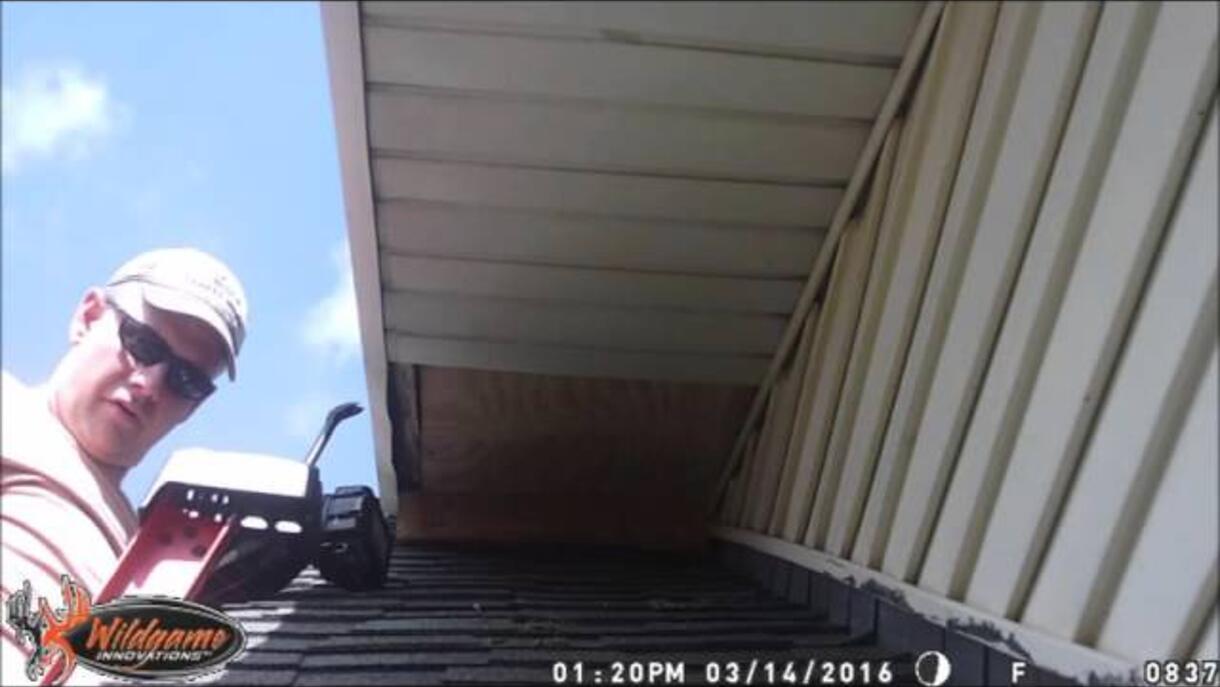
Video: Soffit fix for squirrels and raccoons, from Frontline Animal Removal.
How an exclusion job runs in Fort Worth
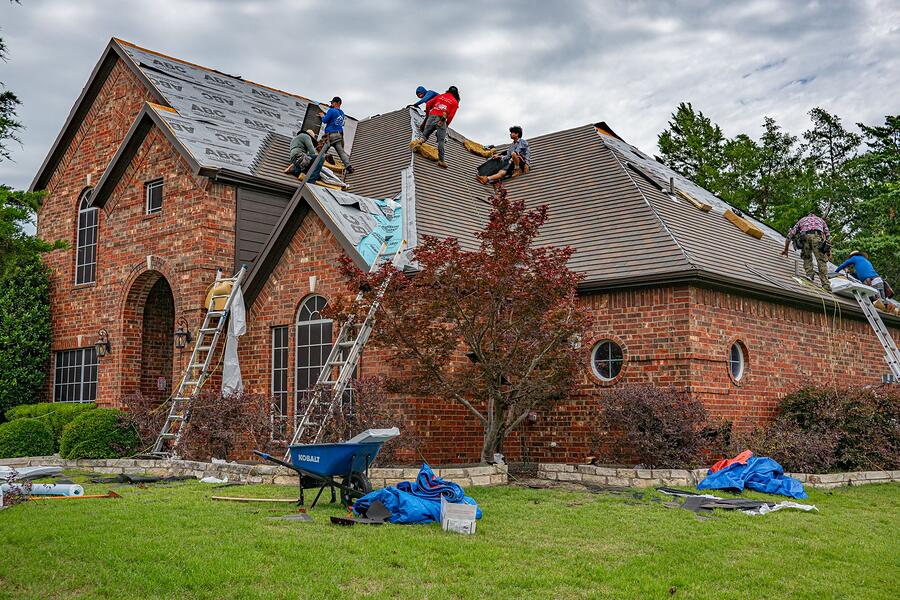
The openings are closed first, and the trapping and the verification are built around that closure.
-
Free inspection of roofline, veneer and garage
Whoever attends works the eaves from a ladder, checks every vent, return, stack and weep hole, then reads the attic for the runs that show which openings are in use. The quote comes back with each opening and its material on its own line.
-
Seal from the eave up
Soffit-fascia gaps, gable and ridge vents, roof returns, stacks, the chimney, weep holes and the garage seal are closed in hardware cloth, sheet metal, copper mesh and mortar, measured against a quarter inch.
-
Trap inside the same day
Snap traps go on the marked runs as the openings close, so nothing inside has a reason to chew a new exit. They stay in place at least a week.
-
Return visit and final closure
Fresh droppings, gnawing and sound are checked; any missed opening is sealed and any one-way door is removed and closed in metal.
-
Written closure list
You receive a list of every closure with the material used, which is what a warranty attaches to and what a buyer or an insurer can read later.
Ready to start? Call (817) 710-2756 or Book a Free Inspection.
Why Fort Worth homeowners route sealing work through us
Three things decide whether a sealed house stays sealed: the measurement the work is held to, the price you saw before it started, and the month it was done.
Closed in metal to a published measurement
The contractor we route seals in galvanized hardware cloth, sheet metal, copper mesh and mortar, and measures each opening against the quarter inch that UF/IFAS gives as the rat-proofing standard: a mouse passes a quarter inch and a rat passes a half. Foam goes behind metal as an air seal and nowhere else. A year on, a foam job has been chewed back open and a metal job has not, which is why the closure list names the material at every opening.
UF/IFAS: a mouse passes a quarter-inch opening, a rat a half-inch; a quarter inch is the sealing standard
Priced as a line of its own, from a free inspection
Exclusion is quoted as a separate line from trapping, cleanup and any follow-up visit, so the number can be set beside another bid and understood. HomeGuide's 2026 national band for full-home exclusion is $500 to $2,500, and the free inspection is what places a specific Fort Worth house inside it. Homeowners in forums describe sealing quotes that range from under two thousand dollars to tens of thousands with no way to tell why; an itemized quote is the answer to that.
HomeGuide 2026: full-home exclusion $500 to $2,500 nationally
Sealed before the fall migration
Rodent calls in Fort Worth ramp through the fall and peak in January and February as the animals move into attics for warmth, and a house sealed before October meets that season closed. The contractor we route treats a September inspection as the best-timed call of the year, because every opening found then is a sealing line instead of a trapping line, and the return visit lands before the first cold night instead of after it.
Fort Worth seasonality: calls peak January to February; seal before October
What Reddit Says About Rodent Exclusion in Fort Worth
Sealing is the part of a rat job that homeowner threads argue about most, and the argument starts with a number the homeowner did not understand. People in r/pestcontrol and r/HomeImprovement tell each other to get several bids for the same scope, to insist that exclusion is priced apart from trapping and cleanup, and to ask outright whether the company does the repair work or only sets traps and refers the sealing elsewhere. Local operators are preferred over national brands, repeatedly.
The red flags are specific. Trapping with nothing sealed is described as harvesting rodents. Sealing with animals still inside is called out as the opposite mistake. Poison-only plans that never touch the roofline are the most criticized practice in the corpus, and the line that poison makes rats thirsty so they go outside to die is treated as a tell that the person saying it is dishonest. Quotes that bundle a monthly monitoring contract into the removal price, and companies that keep returning for months with no change, draw the same warnings. Real quotes in the threads for similar sealing work run from under two thousand dollars to tens of thousands, and the recurring question is whether the homeowner is being taken advantage of.
The questions they pass around are about scope and warranty. What exactly is included and what is a separate line item? Is the exclusion warrantied, and does it renew or end after one term? How many follow-up visits are included? What happens if they come back? Do you decontaminate or only seal and trap? Entry-point education lands well in these threads; people want to know the size of the gap that matters and where on the house to look for it.
Under the technical talk is the same thing every time: someone who cannot sleep and has been told they are overreacting. Sealing is the step that lets them stop listening for it.
The contractors we route quote the sealing on its own line, name the material at each opening, and answer the warranty question in writing before the work starts.
A typical exclusion job on a Fort Worth roofline
The situation: A family in a two-story 1920s Tudor in Ryan Place has heard running above the upstairs bedrooms every night since the first cool week of the fall. A live oak limb lies on the rear roof slope, the boxed roof returns at the front gable have been open since the house was built, and the original gable vent screen has rusted through. A previous company set bait in the attic and left; the noise paused, a smell arrived in a wall, and the noise came back. One of the parents has started sleeping downstairs.
What gets done: Whoever attends walks the eaves and finds grease marks at both roof returns, the chewed gable screen, a soffit-fascia gap along the rear eave where the oak limb rests, and two oversized plumbing stack holes in the decking. The roof returns are closed in sheet metal, the gable and the rear soffit run get quarter-inch galvanized hardware cloth screwed to framing, the stacks are packed with copper mesh under new flashing, and the weep holes on the brick chimney base get mesh inserts. Snap traps go on the run along the top plate the same afternoon and stay a week. The dead animal from the earlier bait is found behind the upstairs closet wall and removed as a separate line, and a pruning recommendation for the oak goes on the report.
How it turns out: The traps take three adults in the first few nights and then nothing. The return visit finds no new droppings, the smell is gone with the carcass, and the family keeps a closure list naming the returns, the gable, the soffit run, the two stacks and the weep holes with the material used at each.
Exclusion questions from Fort Worth homeowners
These are the questions that come up when a Fort Worth house is about to be sealed.
Call (817) 710-2756Will sealing the vents and weep holes hurt the attic ventilation or the brick?
Done in the right materials it will do neither. Quarter-inch hardware cloth over a gable or ridge vent passes air and stops the animal, and a weep-hole insert is a mesh plug designed to let the wall drain and breathe while stopping a mouse. What blocks a vent is foam sprayed into it, and what damages brick is mortar packed into every weep hole, which traps water inside the veneer. A Fort Worth attic runs hot for five months of the year, and the contractor we route keeps every vent working while closing it to anything a quarter inch or larger.
Do you have to seal the whole house or just the hole they are using?
The whole house, because the opening in use today is one of several and a rat pushed off it will test the next one within days. A roof rat that has been coming in at a soffit corner knows the gable vent and the roof return as well. The free inspection lists every opening a quarter inch or larger, and the quote prices them as a set. Where budget is tight, the roofline openings come first and the ground-level ones can follow, and the quote should still show all of them so nothing is a surprise later.
How long does exclusion take on a Fort Worth house?
Most houses are sealed in a single visit, with trapping running a week or two afterward and a return visit to verify. A two-story house under the oaks with open roof returns, several stacks, a chimney and a crawl space can take a second day, and the crawl space is often scheduled as its own visit. HomeGuide puts trapping a small number of animals at two to three days and a severe infestation at one to two months, and sealing on the first visit is what keeps a job at the short end of that.
Does the sealing come with a warranty, and does it renew or run once?
The contractor doing the sealing sets the warranty terms, so ask for three things in writing: how long it runs, what it covers, and whether it renews. Some warranties cover a reseal only; some include a trapping visit if animals get back in; some run a fixed term and end; some renew for a fee. Find out which kind it is before the ladder goes up and have it written onto the quote. The warranty attaches to the closure list handed over at the end, so that list belongs with the house papers.
What if they get back in after the house is sealed?
A return after sealing means an opening was missed, a closure was damaged, or something new opened up, and the first step is a walk of the closure list to find which. A garage seal that tore, a limb that grew back onto the roof, or a storm that lifted a soffit panel are the usual causes in Fort Worth. Inside the warranty period, the terms you asked about at the start decide whether the reseal and any follow-up trapping cost anything. Either way the fix is the same closure in the same metal, and the list tells the next person where everything is.